HYDERABAD: An intense debate is raging in Andhra Pradesh over the propriety of forming a separate Telangana State, following the resignations of the Telangana Rashtra Samithi MPs, MLAs and MLCs. While the Congress government boasts of ensuring equitable development of regions obviating the need for bifurcating the State, divergent opinions are expressed by Opposition parties, including a section of the ruling party itself.
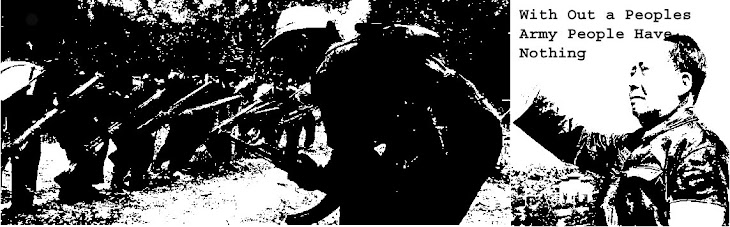
But none of them is willing to publicly debate whether the bifurcation could lead to Maoist reconsolidation in Telangana.
Chief Minister Y.S. Rajasekhara Reddy, however, shared his concern about the possibility of naxalites regaining a foothold in Telangana in the event of bifurcation.
Speaking in the Assembly on February 14, Dr. Reddy quoted State and Central intelligence reports in this regard and cited Chhattisgarh, now grappling with rebel activity.
Such an assertion should have become a point of political debate. The Opposition parties did not react openly, though the issue is being debated in their internal meetings.
The contentious issue, however, has now come into focus with the Maoists welcoming the TRS resignations and stating that they would have a ‘soft corner’ for the TRS if it built up a movement to achieve Telangana.
The issue was briefly touched upon by TRS chief K. Chandrasekhar Rao on February 5 when he told a meeting in Hyderabad Central University that his “party had a political agenda to control naxalism in six months” after Telangana was formed.
UNPA chairman and Samajwadi Party president Mulayam Singh Yadav, during his visit to Hyderabad in January, expressed opinions similar to Dr. Reddy and cited Chhattisgarh and Jharkhand. His remarks made in the presence of Telugu Desam Party supremo Chandrababu Naidu was seen as a move to checkmate TDP leaders, who wanted the party to take a pro-Telangana stand.
The intelligence inputs, which Dr. Reddy quoted, are apparently based on three premises – lack of political resoluteness to tackle the Maoist problem provides an opportunity for the rebels to regain their foothold; contiguity of rebel-controlled Bastar forests in Chhattisgarh to three Telangana districts, could enable them to expand their area of operations; and that smaller States are more vulnerable to Maoist expansion, more so in the case of newly formed States, where political expediency could force the State to adopt a friendly attitude towards naxalites.
The first premise — the factor of lack of political will, is inversely proportional to the growth of Maoist activity is indisputable. Andhra Pradesh is the best example of Maoist activity picking up, whenever ruling parties adopted a soft line. Jharkhand, would provide another example of how naxalism grows, if there is no political will.
The second premise of Maoists expanding their base from Bastar forests can turn out to be true, irrespective of whether Andhra Pradesh is bifurcated or not. Three Telangana districts, Khammam, Warangal and Karimnagar share borders with Bastar where security forces literally fight for their survival. Unable to bear the police onslaught in Andhra Pradesh, the Maoist cadres had earlier retreated into Bastar. But now they are slowly staging a come back in Telangana.
The third premise, the vulnerability of smaller States may not stand scrutiny, as growth of naxalite movement had invariably been based on issues like exploitation and non-governance leading to lack of development.
Maoist activity in Chhattisgarh and Jharkhand had grown when they were part of undivided Madhya Pradesh and Bihar respectively for the last three decades. The merger of the CPI-ML Peoples War and the Maoist Communist Centre of India (MCCI) had provided a pan-India presence for the Maoists.
The premise of vulnerability of smaller States is apparently based on the assumption that the ruling party in a newly formed state might accord least priority to tackling the Maoist problem. There is some basis for this as different political parties have tried to woo the naxalites for their electoral gains.
If TDP founder N.T. Rama Rao had eulogised naxalites as ‘patriots’ in 1982, the then Congress Chief Minister Marri Channa Reddy wooed them in 1989. The present ruling party too followed a soft line and promised to hold talks with the naxalites in its 2004 election manifesto.
Irrespective of the moves from the political parties, Maoists have been steadfastly expanding their activity based on social problems. Prime Minister Manmohan Singh put things in perspective when he told a meeting of Chief Ministers in 2007 that naxalism drew strength from lack of development. Obviously, if there are no issues, Maoists have no ground to exploit, be it a small state or a big state.


No comments:
Post a Comment