Showing posts with label india. Show all posts

Tuesday, February 19, 2008

'India has largest number of undernourished people'


WHEN THE STATE DIDN'T WORK IN THIS AREAS PEOPLE LIKE BINAYAK SEN WORK THERE TO HELP PEOPLE FOR THAT REASON STATE MADE A CONSPIRACY TO KEEP HIM IN PRISON

Take Medha Patkar: 20 years of peaceful resistance. No result. Take Sharmila Irom: 7 years of heroic fasting. No result. Take Binayak Sen…

New Delhi: India is home to the largest number of undernourished people in the world, and the country director of the United Nations World Food Programme (UNFP) says that malnutrition in tribal areas is a vicious cycle of underdevelopment, ignorance and unemployment that requires a multi-pronged solution.

Malnutrition among children below the age of three is pegged at nearly 44 per cent against the sub-Saharan average of 25 per cent in Africa, said Gian Peitro Bordignon, country director and India representative for the World Food Programme (WFP).

"India has the largest number of undernourished people in the world and one-third of the world's underweight children. There are more than 220 million people who are hungry and food-insecure in the country," Bordignon told IANS in an interview.

For more news, analysis click here>>

The World Food Programme, which has been working in India to end hunger since 1963, has assisted over 1.5 million women and children in the country in 2007.

"In Chhattisgarh, one of the most backward tribal states in the country, nearly 50 per cent of people in villages suffer from malnutrition. The food situation is pre-occupying," Bordignon said.

He is just back from a tour of Chhattisgarh, where the WFP is implementing a micro-level village development programme, the Grameen Pushti Yojana, with the National Mineral Development Corporation and grassroots non-profit groups in Dantewada in Bastar, a hotbed of Maoist violence and widespread poverty.

The problem of hunger in Chhattisgarh's tribal areas is complex, Bordignon said.

According to him, it is a vicious cycle of underdevelopment, marked by total absence of income generating activity, ignorance and security-related problems that have led to lax supervision of food delivery programmes. This means reduced accessibility of the people to basic food items.

Bordignon feels the problem calls for a multi-pronged solution. "We call it the life-cycle approach. It is a package of solutions that ensures better value in terms of food commodities, accessibility to abundant food and self-reliance on one hand and better delivery services on the other.

"At the same time, we educate tribals - men, women and children - about better hygiene, health, food habits and agriculture to ensure long-term development," the WFP official said.

Food habits in the remote villages of Chhattisgarh are strange, Bordignon observed.

"The tribals in Dantewada don't drink milk because they believe cow milk is meant solely for calves, not humans. As a result, they don't milk their cattle. The tribals have limited access to fresh vegetables and fruits, and their intake of minerals and vitamins is inadequate," he said.

The UN food arm, which plans to improve the overall nutrition and quality of food of the tribals in the area, will oversee food procurement and implementation of the project.

The Grameen Pushti Yojana was unveiled by central minister Ram Vilas Paswan Jan 18 and will take off March end. The plan looks into "all aspects of lifestyle uplift, with fortified food for children as the core development area", Bordignon explained.

Under the programme, WFP will distribute among children its fortified food, Indiamix, a blend of soya, vitamins and minerals, rich in micro-nutrients.

"It is already part of the government's Integrated Child Development Scheme (ICDS)," Bordignon said.

Over 50,000 children and lactating mothers will benefit from the programme, which will cover health, sanitation, income generation, horticulture and setting up of grain banks in nearly 35 Chhattisgarh villages, the UN food official said.

Bordignon has over 20 years of experience to his credit. In Nepal, he implemented a pilot de-worming project within the ambit of the WFP primary school feeding programme, which was later developed into a worldwide WFP initiative.

"We have increased the pace of work in India lately," he said.

The WFP has roped in sitar exponent Anoushka Shankar, daughter of maestro Ravi Shankar, as its latest celebrity advocate. The list includes heavyweights like Hollywood stars Penelope Cruz, Drew Barrymore and Collin Farrell and soccer sensations Ronaldinho and Kaka from Brazil, who have been campaigning for the reduction of hunger worldwide.

Saturday, February 16, 2008

Maoist violence not biggest security challenge: Patil


Saturday, 16 February , 2008, 18:07

New Delhi: A day after 14 people were killed by Maoist rebels in a major offensive in Orissa, Home Minister Shivraj Patil Saturday denied that leftwing extremism was the single biggest security challenge to the country.


"I don't think it (Maoist violence) so. Now, don't ask me to comment on my colleagues or what the prime minister said. You asked me for my opinion and I will give you my opinion," Patil told CNN-IBN's "Devil's Advocate" in an interview.

Patil's statement flies in the face of Prime Minister Manmohan Singh's repeated assertions in many forums that Maoists posed the single biggest security challenge to India and even exhorted chief ministers at a recent conference to cripple their rebellion with all means at their command.

"Not a day passes without an incident of leftwing extremism taking place somewhere or the other. There also seems to be a consolidation of various groups with better coordination and strike capabilities," Manmohan Singh told chief ministers at a conclave on internal security in December last year.

"I have said in the past that leftwing extremism is the single biggest security challenge to the Indian state. It continues to be so, and we cannot rest in peace till we have eliminated this virus," he said.

Fourteen people were killed and at least five injured after Maoists launched major offensives at Nayagarh and Daspatalla in Orissa on Friday night.

During the interview, Patil said there had been an overall improvement in states affected by Left extremism except for Chhattisgarh, Jharkhand and Orissa.

"Let us not create a fear psychosis. We are here to understand the problem and find a solution," he said.

Referring to the surge in violence in both Chhattisgarh, the epicentre of Maoist violence, and Jharkhand, Patil said the non-availability of infrastructure and the terrain were factors responsible for the increased attacks.

"We (union government) are doing whatever possible to help states affected by this violence. Almost 37,000 policemen have been detailed by the centre and deployed in Naxalite (Maoist) affected states. In Chhattisgarh alone, we have provided 17,000 men," said Patil.

Patil also revealed that the government wanted to make constitutional changes to give itself special powers to handle Maoist violence, but the opposition Bharatiya Janata Party as well as other parties refused to accept such amendments.

Although the number of violent incidents blamed on the Maoists fell from 1,509 in 2006 to 1,285 until Oct 31, 2007, the number of security personnel killed by them rose from 157 last year to 188 until the end of October 2007.

Thursday, February 14, 2008

“I oppose the West Bengal government despite being a Leftist. I oppose it because I am a Leftist,”

New Delhi, February 13

“I oppose the West Bengal government despite being a Leftist. I oppose it because I am a Leftist,” said veteran playwright and activist Habib Tanvir. His word summed up the spirit of a forum of writers and intellectuals that came together to protest the clamping of “free speech and expression”, in the aftermath of the Taslima Nasreen episode.

Author-activists Mahashweta Devi, Arundhati Roy, Ashis Nandy and Girish Karnad were also part of the forum.

The Bangla writer’s condition — Nasreen is living in government custody “somewhere in Delhi” with her visa set to expire on February 18 — was the immediate provocation for the protest. The forum demanded full citizenship for Taslima and denounced the persecution of artists and activists all over the country.

Whether it is journalist P Govind Kutty from Kerala or Dr Binayak Sen in Chattisgarh, the government is using the Maoist or Naxal threat as an excuse to strip these people of their civil rights, the group claimed in an open letter to the Prime Minister.

Mahashweta Devi slammed the Buddhadeb Bhattacharjee administration and a complicit UPA for “manipulating” the Taslima Nasreen issue to distract from “continuing atrocities in Nandigram”, and expressed full solidarity with the writer.

Roy also questioned the link between Nasreen and Nandigram. She quoted Mohammed Safi Samsi’s report in The Indian Express (December 2), describing how the Taslima Nasreen issue was being systematically blown up, so that now this gathering was concerned with free speech rather than the recapture of Nandigram.

She also cautioned against seeing the issue simply as a clash between religious fundamentalism and secular liberalism, even though that is Nasreen’s own assessment as well. She pointed out how popular sentiment is politically twisted and how free speech is under siege from “many fundamentalisms”— religious, ultra-nationalist and market fundamentalism — intertwined in the strangest ways.

In Chhattisgarh, public security law is vague enough to criminalise all citizens and grant the state sweeping powers to pick their victims. This systematic encroachment on the civil and democratic rights of people was the big fight of our times, she said.

“The system has never been as loaded against the powerless as it is today,” said Tarun Tejpal, adding that: “The issues of Binayak Sen, Taslima Nasreen and M F Husain were as fundamental to the idea of India as any we’ll ever have.”

Though many forum members disagreed with the views of those victimised by the state, they were united by their commitment to the principle of free expression. “We are not pleading the cause of Taslima Nasreen, M F Husain or Binayak Se — we are pleading our own cause,” said Ashis Nandy.

Govt extends Taslima’s visa

I believe that the ban on People’s March should be lifted immediately and its editor unconditionally released,” says Arundhati.


NEW DELHI:
After sleeping over Taslima Nasreen’s visa application due to political compulsions, the government woke up on Wednesday to renew the visa of the controversial Bangladeshi writer amidst complaints by a slew of authors and journalists that political parties and their armed squads were mounting a concerted assault on people’s right to free speech.

The writer’s Indian visa was last extended for six months on August 10 last year and she ran into a fresh round of controversy two months back with violent protests by a little-known Muslim group in West Bengal complaining that her writings were anti-Islam.

The Centre, preferring not to take a strong stand, kept her in a safe house in the Capital against the wish of the writer to return to West Bengal where the State Government was unenthusiastic about receiving her.

“Taslima is only one in a long list of journalists, writers, scholars and artists who have been persecuted, banned, imprisoned, forced into exile or had their work desecrated in this country,” writers Mahasweta Devi, Arundhati Roy, Outlook magazine editor Vinod Mehta and Tehelka editor Tarun Tejpal, among others, said in a press statement.

The writers also alleged that Taslima was told by External Affairs Ministry officials that it would be better if she left for a European country at government expense to return when the controversy lost steam, advice turned down by the author.

Every day the threat to free speech and expression increases, the writers say citing the detention of journalists Prashant Rahi from Uttarkhand, P Govidan Kutty from Kerala, Srisailum from Andhra Pradesh and Praful Jha from Chhattisgarh.


“Govindan Kutty, editor of People’s March, a publication banned for being sympathetic to Maoist ideology, has been arrested and imprisoned.


The Maoists have as much right to freedom of expression, as much right to place their ideology - however abhorrent the government or anybody else may believe it to be - in the public domain, in the so-called ‘market place of ideas’ as anybody else.


I believe that the ban on People’s March should be lifted immediately and its editor unconditionally released,” says Arundhati. The writers and journalists in a letter to Prime Minister Manmohan Singh also urged the release of all writers and journalists in detention.

They demanded that the spurious cases filed against M F Husain be dropped and he be allowed to return to a normal life in India.

Saturday, February 9, 2008

State opts out as private army steps in

The central Indian state of Chhattisgarh is rich in minerals and resources, and is also home to a large proportion of India’s indigenous tribal peoples. However, for over 20 years the region of Chhattisgarh has been one of the most Naxalite-affected areas of the country. In 2000, when the state of Chhattisgarh was created, the People’s War Group, a Maoist group with a belief in armed revolution declared the tribal forest region as a guerilla zone in which no state officials or institutions would be allowed to function. Since mid-2005 the situation has worsened, with the Dantewada region of Chhattisgarh now locked in a situation akin to a civil war between security forces, Maoist groups, and an armed vigilante force known as the Salwa Judum acting as auxiliaries for the police.
While all parties to the conflict have perpetrated atrocities in Dantewada, violence by the Salwa Judum over the past two years has been widespread and particularly vicious. A public interest litigation petition recently filed by a group of citizens in the Supreme Court records that extreme levels of violence continue in the area, with around 540 people having been killed by the Salwa Judum and security forces since June 2005. Further, the petition records that at least 2, 825 houses have been burnt, 99 women raped and approximately 100,000 persons forcibly displaced by the Salwa Judum.[
The Salwa Judum
While national media coverage of the conflict in Dantewada has been piecemeal, in 2005 a coalition of independent non-governmental organisations reported that the attacks and killings of villagers by the Salwa Judum were frequent and brutal, and that the impact of these attacks on the daily life of the people was devastating.[2] A further independent inquiry in 2006 found evidence of mass killings, burning of homes, and frequent attacks on women, including gang-rape.[3] The most recent reports from non-governmental organisations operating in the region confirm that violent attacks continue to this day.
The looting campaigns of the Salwa Judum have led to the forcible displacement of many thousands of people within their own state. Typically, once Salwa Judum forces have pillaged local villages, huts and infrastructure are completely destroyed, leaving no place for residents to return.[4] As well as creating severe humanitarian problems, this large-scale forced displacement has also severely threatened the cultural viability of the indigenous peoples of the region, who depend on their local lands for sustenance and survival.
Inadequate relief camps
Since 2005 the Government of Chhattisgarh has set up a number of “relief camps” in Dantewada district for those forcibly displaced by the conflict, but has struggled to ensure they are properly resourced. Quantities of government rations in the camps vary significantly, and many people have been engaged in food for work schemes, often at less than the minimum wage.[5] In many of the camps there is no proper shelter, and sanitation conditions in nearly every camp are negligible. According to a report conducted by the National Commission for Women, “the enforced displacement is creating havoc with their normal way of living and is affecting women and children in particular.”[6]
Health related infrastructure in the vast majority of camps is also extremely poor. In a number of the newer settlements mobile health services have been set up, but these are they are often ill-equipped and run at sub-optimal levels due to transport and logistical problems. Further, many of the camp inmates have reportedly been physically and sexually abused, and there appears to be no psychological support available for the victims.[7]
Government sponsored terror?
Against this backdrop it is deeply regrettable that government agencies have so far failed to take action to disarm and disband the Salwa Judum. Of even more concern is the substantial evidence that suggests that Central and State governments have in fact supported Salwa Judum campaigns against non-combatant villagers in Dantewada using the pretext of counter-terrorism measures.
According to official statements made by the Indian government, the Salwa Judum is a “voluntary and peaceful”[8] group that has been successfully combating the activities of Naxalites operating in Chhattisgarh. However, a number of facts appear to negate the government’s claim that the Salwa Judum has been operating independently. For example, the Government of India’s Annual Reports acknowledge Central Government support for the creation of “Local Resistance Groups” such as the Salwa Judum though lump sum funding for “security related expenditure”.[9] Further, as of 2006 the Government of Chhattisgarh had officially appointed 3500 “Special Police Officers” to support the Salwa Judum.[10] These “officers”, generally unemployed youths, have been given military and weapons training in order to set up a paramilitary vigilante structure parallel to the Naxalite movement.
Counter-terrorist measures?
There is little doubt that the spectre of armed attacks by Naxalites raises legitimate security concerns for the state of Chhattisgarh. However, both the state and central governments and their agencies have the power to take security measures against Naxalism that are lawful and consistent with the fundamental rights principles of the Indian Constitution and with international human rights and humanitarian law. In contrast, the large-scale evictions of village-dwellers from their homes in Dantewada have been conducted arbitrarily and with disastrous effects on their livelihoods.
Given the relatively poor socioeconomic indicators found among scheduled tribes in Chhattisgarh, the government’s fear that the collectivist ideas broadly espoused by Naxalites may have some appeal to villagers in Dantewada is not without basis. Rather than supporting the Salwa Judum’s programme of forced evictions, however, the government would better address the current appeal of Naxalite policies in the region by improving the indigenous people’s access to rural education, healthcare, and employment opportunities, as well as improved security of tenure and property rights. In contrast, the ongoing violence by the Salwa Judum can only lead to an escalation of political tensions in the region.

Conclusion
Government sanction - let alone sponsorship - of Salwa Judum activities is clearly a violation of the basic rights guaranteed to Indian citizens under the Constitution, as well as India’s obligations to its citizens under international law. Further, the acts are aggravated in scope in that they disproportionately affect the ability of indigenous tribal groups to exercise their traditional cultures and way of life in the area.
While the Chhattisgarh government may hope that Salwa Judum campaigns and the permanent forcible resettlement of villagers will put an end to Naxalite action in Dantewada, the human side effects of such a plan have already proven catastrophic. An urgent change in strategy is required if a humanitarian crisis of massive proportions

Thursday, January 31, 2008

I needed to earn money."


Childhood lost in India's war against Maoists


DANTEWADA, India (AFP) — Asha and Ranu were just in their teens when they were given khaki uniforms and .303 rifles to help local police fight Maoist rebels in the forests of central India.

"We thought we should do the same as these Naxals do, who come with knives and catch hold of people and beat them up," said Asha, a member of India's escalating war on the Naxalites, as the Maoist rebels are known.

"So we joined the police," said the bright-eyed 17-year-old, who says she was recruited about two years ago as a state-supported backlash against the rebels in central India's forests got underway.

Ranu is a year younger and was also recruited as a "special police officer" in the tribal region of Dantewada, the epicentre of India's Maoist insurgency.

"Every house has to send one person, so I went in," said Ranu, who along with her family fled her village in Chhattisgarh state and went to a state-run relief camp where thousands of people live under police security.

Maoist rebels, who control large swathes of the impoverished state, made inroads here two decades ago by fighting for better wages for villagers who live by gathering leaves for Indian cigarettes for a pittance.

The rebels have now been branded by India's Prime Minister Manmohan Singh as the biggest single threat to national security.

With regular police shunning the combat zone in the south of Chhattisgarh, authorities appear to have enrolled child soldiers from the special security camps that now house 50,000 villagers who have fled or have been brought in from Maoist areas.

In the camps, officials urged families to send one member to the special police, a rag-tag force of 3,600 in south Chhattisgarh that outnumber the regular police.

Ranu, who, like other youngsters interviewed, is fearful of speaking out and does not want her full name used, said at first her task comprised of standing at a check post.

With rifle in hand, she asked people "where they were coming from and where they were going to."

As rebels began attacking the special police, she now mostly does guard duty in the camp. "We will be able to fire and we have fired," she said. But when asked when she had actually used her gun, she replied that she has only used it during training.

Officials, however, deny minors are fighting on behalf of the state.

"No minor as an SPO (Special Police Officer) is the stated policy of the Ministry of Home Affairs and we strictly adhere to that," insisted Dantewada superintendent of police Rahul Sharma.

"We have proper documented reports where their age is above 18."

Sharma also countered that the rebels recruit children as young as seven into their youth wing, using them as informants and to lay explosives.

But human rights groups say that youngsters in the police force appeared to be schooled to say they were eighteen in response to any inquiries.

And a lawsuit filed in India's Supreme Court last year by two noted academics and a former government officer called for an enquiry into human rights violations related to the state's anti-Maoist operation, alleging minors have been enlisted.

The SPOs, whose male members help guide paramilitary forces to remote villages to find Maoists, have been increasingly targeted by the rebels, with some 62 killed last year out of 188 security force deaths.

The young policewoman Ranu, who earns about 35 dollars a month, hinted that ages were indeed bumped up on paper.

"We have all been made 18," she said defensively.

Recruits are required to show that someone in their family lost their life or was hurt in some way by the Maoists -- implying that the authorities want a force that is bent on revenge.

Police say the requirement is needed to ensure their loyalty.

Munna, aged 18 and also living in a security camp, said he joined because his older brother was hacked to death with an axe by the Maoists two years ago.

"What was the point of just sitting around in the camp?" said Munna, dressed in a ribbed shirt and track pants, a self-loading rifle over one shoulder. "I needed to earn money."

Wednesday, January 30, 2008

LEADER ARTICLE: Death Of The Mahatma

On the 60th year of the murder of Mohandas Gandhi, we must recognise the ambivalence towards him in India's modernising middle classes. Gandhi was not killed by British imperialism or Muslim fanatics, but by middle-class Hindu nationalists committed to conventional concepts of statecraft, progress and diplomacy. He was not killed by a lunatic, as Nehru alleged, but by one who represented 'normality' and 'sanity'.

The middle-class antipathy to Gandhi cuts across ideologies. During one of her earlier tenures, Mayawati precipitated a first-class public controversy by attacking Gandhi. But she was only joining a long line of distinguished critics of Gandhi, stretching from Mohammad Ali Jinnah, the classical liberal turned Muslim nationalist, to Bal Thackeray of the Shiv Sena. New, aggressive critics of Gandhi are now being thrown up by the knights of globalisation in India.

The fear of Gandhi has been consistent in India and it has never been confined to the expensively educated Indians now flourishing in the global knowledge industry. This fear is the fear of ordinary Indian citizens suffering from that incurable disease called Indianness and suspicion of the open politics that empowers them and allows them to bring into public life their strange, alien categories. It was this fear that Nathuram Godse took to logical conclusion on January 30, 1948. His was the third attempt on Gandhi's life by the Hindu nationalists, the first of which was made in 1930s. They made no such attempt against any other key secular leader in India or against Muslim leaders seen as enemies of Hindus.

Godse thought he was executing Gandhi on behalf of a majority. Exactly as Mayawati and, before her, E M S Namboodiripad felt that they were speaking on behalf of a majority - the bahujan samaj, the proletariat, the Shudras and the Dalits - when they attacked Gandhi. However, once the movement to which Godse belonged began to falter as an ideological formation and succeed as a political party dreaming of capturing power, it began singing a different tune. The RSS included Gandhi's name in the daily prayers of its branches and, in the 1980s, the BJP even adopted 'Gandhian socialism' as its official party ideology. May be Mayawati's hostility to Gandhi had not waned when she spoke out because she was yet to make a bid for pan-Indian presence.

At the other end of the spectrum, the Leninist hacks have always considered Gandhi a menace to progress, modernity and rationality. The respect to Gandhi that some of the retired Stalinists have begun to show in recent years is a consequence of their political demise. The vendors of secular salvation now find that Gandhi has survived our times better than they have.

M N Roy, who broke away from Marxism, disagreed with the Leninists on many counts but not on Gandhi. His three essays on Gandhi, read chronologically, show a declining hostility towards the Mahatma. The first is dismissive, the second ambivalent, the third mildly positive. As his confidence in being able to mobilise people for his version of revolution faltered, he came to grudgingly appreciate Gandhi's ability to touch the ordinary Indians despite his 'irrational' credo. Indian Maoists in the late 1960s and early 70s were no less hostile to Gandhi. He with his toothless smile seemed to them a sly, scheming warhorse brainwashing rural India with his bogus ideology, whereas they, despite their direct communion with objective, scientific history and theoretical guidance from the great witch doctor at Beijing, had been exiled to urban India to survive as an ordinary terrorist outfit. As Gandhi was dead by then, they took out their anger against him by breaking his statues.

Within a decade though, from within the ranks of Indian Maoists emerged some who drew heavily, often creatively, upon Gandhi. Pushed to the margins of politics, with their dreams of an early revolution in tatters, the ageing lions began to ruminate over their failures and take Gandhi seriously. Two steps backward and one step forward, as the great helmsman might have said! The liberals have never found Gandhi digestible either. Shankaran Nair, an early Congress leader, said that Gandhi was against everything that the great sons of 19th century India stood for. Gopal Krishna Gokhale was even more forthright. He declared Gandhi's Hind Swaraj to be "the work of a fool" and prophesied that "Gandhi would destroy it after he spent a year in India". Such honest estimates are now rare, because the liberals in the meanwhile have produced their own house-broken Gandhi - modern, nationalistic, progressive, statist and secular. There is nothing left of the politically incorrect, intellectual maverick who took on the imperious Enlightenment vision and refused to accept that its dominance was proof of its finality.

It is possible that Gandhi sensed his growing isolation in public life. The 200 years of western domination had done its job and the definition of normal politics had changed in India. Gandhi chose death, using as his accomplice the naive, lost ideologue, Godse, to sharpen the contra-diction that had arisen between the Indian civilisation and the newborn Indian nation-state. Robert Payne understands this when he says, "For Gandhi this death was a triumph. He died as the kings do, felled at the height of their powers". And Sarojini Naidu was right when she said: "What is all this snivelling about? ...Would you rather he died of old age or indigestion?"

Monday, January 28, 2008

Not a revolutionary book

A STORY BY BUSINESS MAFIA
AP


This year Hindi cinema saw a profusion of films on how individuals overcome personal hang-ups to take their team, family, town, or theatre to an unprecedented triumph. There was Chak De, the hockey film, Goal, the same translated for football, Aaja Nachle for the dancers and Ta Ra Rum Pum for the racing world. Needless to say, apart from the nuanced and superbly scripted Chak De, the rest of the films remained in the “me too” category.

The reason for recounting the box office performance of Hindi films as a start for this book review is very simple. One could not escape a similar feeling of déjà vu while reading this book that one got watching all those films. There is a cacophony of the written word on Naxalism, Maoists and the red corridor in India and even abroad, and this book unfortunately echoes it rather than standing out. There is no new information that Chakravarti doles out in this book than which is already available through public discourse. Nor is his book an academic tour de force like Rabindra Ray’s The Naxalites and their Ideology, which by the way appears in Chakravarti’s rather abbreviated reading list.

His preference for the travelogue style, which should have rescued him from the sketchiness of the information by some stylistic writing, also does not hold interest. Frankly, Suketu Mehta’s Maximum City remains the Chak De of the Indian “discovery through travel” genre, which is so popular today.

Chakravarti’s narrative unfortunately appears a throwback on a 1980s phenomenon in journalism, that of English-educated city journalists travelling to the boondocks, and writing about it, describing the unrelieved unloveliness of India’s countryside in excruciating detail. The boom in television and the internet media has radically changed the way things are looked at, Mandal and the politics thereafter have transformed rural relations and the “gaze” of the rest of the country towards many issues. The simple 1980s dichotomy between the rural and the urban, plains and tribals, high and low caste has become complex and this complexity appears lacking in Chakravarti’s narrative.

The Maoists and the Salwa Judum or even the state government apparatus are not the only players in this theatre. Political parties, Christian missionaries, the Rashtriya Swayamsewak Sangh and their activities and the various tribes’ own self-realisation movements through ecological movements are the facets through which this prism emerges. These don’t form important elements in this book.

Chakravarti in his book talks about the “immunity” enjoyed by foreign and Delhi-based media people from the state’s own censorship rules and norms. The outsiders, compared to local media personalities, are protected by high-reaching contacts, he frequently asserts. Foreign correspondents have a different “voice” while looking at issues affecting India — one was expecting a more “Indian”, more complex view from Chakravarti. This book would have been a triumph had Chakravarti been able to marry his boon of immunity with an insider’s perspective. It does not transcend the feel of a field dispatch.

Having said that, the book is a read through, the style light enough to be read by those who want to attempt a short-hand reading of the extent of the Naxal problem in India. It is also updated, with incidents which happened as late as October 2007 being referred to in the book.

Journalistic and academic writing are miles apart. Journalists try and make up for lack of academic rigour by making stories deeply personal and bringing out the human angle, academics concentrate on the long-term view. Chakravarti has attempted to bring in the personal element through the travelogue and has also peppered the book with statistics and perspective. The blend is uneasy and only works patchily.

If you want a quick study on Naxalism in India, this is the ticket; if not, I would still recommend Ray’s academic tome, easily the best book on Naxalism ever written in India

Sunday, January 27, 2008

Shame on the Indian government !!!

Receieved through G Talk.
No questions on this matter


Bhagat singh, Rajguru and Sukhdev have been
referred as terrorists in an ICSE 6th standard class in social science
subject text book at page number 64 & 65 in Mumbai.... Get up
friends... pass this message like fire.... "


Bhagat Singh,Rajguru and Sukhdev singh were killed by M K Gandhi's Silent order.

Golwalkers photo exists in the Parlament........
Tomorrow we can keep Soniya Gandhi,Narendhra modi

Monday, November 12, 2007

The whole of the BJP is debased’

You worked in Gujarat after the 2002 pogrom. There seems to be a lack of outrage over a genocide of such magnitude.?

To an extent, I witnessed this genocide. I visited Gujarat between April 1 and 5, 2002 as part of a group. Rear Admiral Ramdas, Nirmala Deshpande, Valson Thampu, Father Dominic Immanuel, the Maulanas of Jamait-e-Islami and Jamait-e- Ulema-e-Hind, and others were part of the group. We were on a healing mission. On the second day, we were to stay for the night at a place called Eshwar Bhavan in the Ahmedabad’s Navrangpura area. There, we were accosted by a group of well-dressed Hindu fundamentalists. They told us, point blank, that we were most welcome to stay in the Bhavan but our Muslim colleagues must go stay in a masjid. We said, “We are all together, we are here just to ask everyone to stop this madness.” They simply insisted that Muslims must be separated from the rest. When we said this was not acceptable, they warned us that if the Muslims stayed they would blast bombs at the site.


Which Hindutva outfit did they represent?

They seemed to be from the Vishwa Hindu Parishad. After they left — it was about 9 in the evening — we decided to go to Gandhi’s Sabarmati Asharm on the outskirts of the city. On reaching there, we realised the goons had followed us in their cars. They reiterated their demand. They said, “Don’t think you will be spared because you take shelter in Gandhi’s ashram. We will detonate bombs here and unleash terror as long as these Muslims are with you.” Prime Minister Atal Behari Vajpayee was to arrive the next day, and so we reasoned with them that such violence would be send an inappropriate message. Their reply was, “This has nothing to do with Vajpayee or Modi. This is dharma yudh and we do not want Muslims around.” Ramdas and Nirmala then contacted the Army in Gandhinagar and they gave us protection.

The state machinery was paralysed. TEHELKA offered proof of this.
What I saw on TV and read in TEHELKA gave me goose bumps. A man is boasting how he slit a pregnant woman’s womb; men are talking about hoisting a dead pig atop a mosque. And these men are roaming free. This genocide, and the state’s total complicity… we had sensed all this. But still there was reason to give [them] the benefit of doubt. But after the TEHELKA report, I am beginning to feel that Godhra itself was staged.

TEHELKA’s dissection of Godhra and the fire in Sabarmati Express, does raise some disturbing questions.
About the same time, along with Inder Gujral, Harsh Mander and others, I met Vajpayee at Panchvati. I requested Vajpayee for a white paper on Godhra. I said, find out exactly who was responsible for Godhra. The PM just laughed and said the inquiry was on. Early in April, when the rioting was at its peak, Vajpayee had expressed regret over the carnage, and had famously wondered how he would face the world. He had admonished Modi in this speech and reminded him of his raj dharma (duty as the chief minister). Our esteem for Vajpayee went up. We thought he was one truthful person. We thought he would remove Modi from the chief ministership. Nothing happened. Later, in Goa, Vajpayee took a U-turn, and began to praise Modi. After that statement he was totally exposed.

But Vajpayee has always maintained he was a Sanghi.
After the 2002 election and Modi’s victory, Vajpayee was once asked by a reporter if they would repeat the Gujarat experiment in Madhya Pradesh and Rajasthan which were going to the polls. Vajpayee’s reply was dangerous and irresponsible. As PM, he asked, “Will Godhra be repeated?” No prime minister has made such a dirty statement. Without waiting for what the inquiry said, he had made up his mind on who was behind Godhra and justified the genocide. That’s when we realised this entire party is debased. On our return to Delhi, Nirmala Deshpande, Nafisa Ali and I filed a case in the High Court seeking BJP’s de-recognition as a political party under the Representation of the People (PR) Act. Our contention was that the RSS, VHP, Ba-.jrang Dal and BJP are all one. These different names and different leaders are just for show; their identity is one. If all of them are violent, communal and have participated in genocide, the BJP as the political wing of the Sangh Parivar should necessarily be de-recognised under the RP Act. The judgment on the case is not yet out.

But what is the alternative to the BJP? The Congress behaves like its B-team. Take their role in the 1984 pogrom.
What is the alternative in Gujarat? We only have the Congress occupying the opposition space. When Sonia Gandhi visited Ahmedabad, we were hoping that she would visit Ehsan Jafri’s home and offer solace to his widow. But no, the Congress was afraid of the “Hindu reaction”. So Sonia did not visit her own party MP’s house. Modi’s victory in 2002 was dangerous. More dangerous was Congress’ admission that he had won. This is wrong. Hitler too had used democracy and elections to promote Nazism. How is Modi different? He used a similar model and made Gujarat a laboratory. Is this democracy or fascism? How can we even recognise him as a democratically elected chief minister? This is democracy’s biggest weakness. Modi manipulated these votes through mobs and frenzy. Which is why I think we should de-recognise this party. There’s no scope for such parties to exist under the PR Act.

What about the reaction of most Hindus, the civil society and the media? They seem to offer tacit support by their silence.
There are many who feel strongly about this, but their revulsion is not being channelled properly. Elections have been announced, and people expect the Congress to react. While Laloo Yadav speaks strongly, Jayanthi Natarajan soft pedals the issue. Why? In this depressing scenario, there’s one ray of hope. Sri Sri Ravi Shankar called me and said he was shocked by what he saw on TV.

The general impression is that Ravi Shankar is pro-Hindutva?
That’s true. During the 2004 general election, it was said that Ravi Shankar had sent bulk SMSes canvassing votes for Atal and Advani. The entire Congress lobby believes Ravi Shankar is a representative of Hindutva. It is therefore especially significant that he called me after seeing the TEHELKA exposé. Which is when I suggested that he draft a statement. Valson Thampu and I co-signed it.

Most of the responses have talked about the timing of the exposé and its impact on elections.
This is the height of perversion. Truth in itself is most important. One cannot think of the consequences and then tell the truth. If the truth has to be uttered at a chosen time, it cannot be the truth.

What we call Hinduism encompasses such a variety of philosophies and traditions, that we do not know what we are dealing with. And the violence
in Gujarat happens in the name of Hinduism.
Hinduism is amorphous. You are a Hindu and yet need not be one. This is both Hinduism’s strength and weakness. Hence it is difficult to be a fundamentalist in Hinduism. The most violent face of Hinduism is the caste system, where you view a fellow human with hatred that even an enemy does not deserve.

But Hindutva is pitting Adivasis (like the Chharas) and Dalits against Muslims.
This is dangerous. The four Vedas, the 11 Upanishads and the 18 Puranas never mention Hindu or Hinduism. Neither the Ramayana and Mahabharata nor the Gita use these categories. In fact, Islam’s position on god comes close to the Vedic-Upanishadic position that doesn’t assign a bodily form to god.

All this doesn’t take away from what is happening on the ground.
Yes, a majority of the “liberals” in the country identify themselves as Hindu today. True, a lot of Muslims were killed; but the real murder happening here is that of Hinduism, of the liberal face of Hinduism. Ordinary Hindus do like the glorification of Hinduism and Hindus, but when it embraces such visceral violence, it disturbs them.

Go to the Village. Only then Will You Know the Rural-Urban Divide

It’s true everyone is gaining from growth, but the gap between cities and villages is increasing. The need is to narrow this over time

Thirty lakh crore. That, in rupees, is the order of magnitude of the Indian household markets. I prefer to call it the Rs 30 trillion market and I wish that some day we, as a nation, migrate to counting in millions and billions rather than in lakhs and crores. For the internationally-inclined, Indian households spend or save about $750 billion in a year. Consumer spending has been rising rapidly enough to spur corporates into an investment binge. Private consumption expenditure been growing by over 6 percent per annum in recent years in real terms i.e. after removing the spurious effects of mere inflation. This is about twice the growth rates seen earlier. Consumerism is in. Surprisingly, the debate of whether this extraordinary rise in consumerism is creating a rural-urban divide or not is conspicuous by its absence. The per capita incomes in rural India are about one-third the levels in urban India. And I believe that this difference is rising. No one is complaining because an overwhelming majority is gaining from this growth story, albeit at different rates. It is interesting to note several large companies building aggressive plans to penetrate the hinterland in search of the consumer’s pockets. ITC’s e-choupal, Hindustan Unilever’s Project Shakti and ICICI’s micro-finance initiatives are among the famous cases that have wagered large shareholder funds on strategies to harness the rural markets.

These are staggering initiatives and, I believe, quite risky unless the implementation is focused and accounting very tight. Because rural India is a thinly-spread and rapidly depleting market. As the bigger villages transform themselves into small towns, and the larger towns migrate to cities, the purchasing power in the remaining villages would fall to lower levels (than the current one-third of urban incomes) as these would be the relatively smaller and isolated villages.

ITC chairman Yogi Deveshwar often talks ofcost barriers over the short to medium term that inhibit investments in socially inclusive initiatives. He further laments that markets have failed to reward corporate socia responsibility. With due respect to ITC’s (and several other similar large corporates’) initiatives I guess it need not cost other corporates millions before they learn this rude lesson. Markets are not interested in altruism unless it involves someone else’s money. And Deveshwar’s expectation of fiscal help is equally futile. It is possibly time for a subtle shift in strategy. It is sub-optimal for a company to have a rural strategy. It is wiser for it to have several appropriate regional strategies that combine rural and urban areas. The rural-urban divide is deceptively simple. It is too sharp, too widespread and too diverse. Compare rural Bihar to rural Punjab to understand what I mean.

An appropriate strategy to tap the Indian consumer market would be to divide the nation into roughly equal-sized homogeneous and continuous regions. State boundaries do not work. They are unequal in size and a mix of diverse regions — compare Konkan and Western Maharashtra with Vidarbha or south Gujarat with Saurashtra and Kutch. A homogeneous region would be one that has roughly similar agro-climatic conditions, and similar levels of urbanisation and female literacy.

Within each such homogeneous region, there is a substantial ruboff effect of rural and urban regions upon each other. If a crop does well in a region, it improves the purchasing power in both rural and urban regions because families are usually spread over both. Similarly, if employment in a city or a town increases because of new businesses, it has a trickledown effect on the surrounding villages since labour is attracted into the towns from the surrounding areas. Neighbourhood effects work. Eventually, this implies a convergence of income levels within the region. Over time, variation in income levels within a homogeneous region would narrow. Corporates need to ride this natural phenomenon and accelerate this convergence. In the current booming times, even sub-optimal strategies would yield results. However, when the markets enter the rough patch, a finely calibrated regional strategy would stand a better chance of providing sustained growth

Thursday, November 1, 2007

Our Inherited Brutalities

Thanks to Tehelka and S ANAND

AP

In India, tradition is a mask for tyranny. Collective violence is unleashed upon all those who defy it

S. ANAND
New Delhi

Most people do not realise that society can practice tyranny and oppression against an individual in a far greater degree than a government can. The means and scope that are open to society for oppression are more extensive than those open to the government; also, they are far more effective. What punishment in the penal code is comparable in its magnitude and its severity to excommunication? — BR Ambedkar
Willing cops In Bihar’s hagalpur, policemen tied a man to their motorcycle and dragged him in front of live television cameras. The crowd egged them on.

A CONSERVATIVE SOCIETY, enforcing its dictates with an iron hand — that is who we are, us Indians. Men and women who do not fall in line are routinely persecuted — and killed — under antiquated norms of honour and right conduct. Each day, violence is unleashed by society in its various manifestations — the family, biradari, caste, village, religion. Governed by unwritten rules, the “world’s largest democracy” seems to be doing little better than a theocratic dictatorship.

A spate of incidents testifies to this. The mysterious death of Rizwanur Rehman in Kolkata for the crime of loving and marrying Priyanka Todi, a Hindu; the September 10 lynching of ten people of the Kureri community in Vaishali, Bihar; the ostracisation of HIV-positive Jayalakshmi Bhovi, a midday-meal worker in Thombattu in Karnataka’s Udupi district; the televised mob attack on August 27 on Salim Ilyas, an unemployed youth in Bhagalpur, Bihar, which inspired a similar attack on a “gypsy” woman and her children in Kerala on October 3; the forced expulsion in September of 62 families of Pardhis — an itinerant tribe — from Chothiya village, 165km from Bhopal, and the razing of their homes built on authorised land; the killing of 30- year-old Natarajan, tied to a coconut tree by mill workers in Salem, Tamil Nadu, on September 23; the regular persecution of men and women who prefer to choose their own partners anywhere in the country. Life in India’s village republics can indeed be nasty, brutish and short. An urban location may offer relative relief, but not necessarily. As popular television actor Aamir Ali, who plays a Hindu protagonist in the serial Woh Rehne Wali Mehelon Ki, would testify. He was recently denied the right to buy a house in Springfield Co-operative Housing Society in the upmarket Andheri suburb of Mumbai — a city that passes for India’s most cosmopolitan even when it nurtures caste and community-specific housing societies.

Ali filed a public interest litigation petition before the Bombay High Court this August, but lawyers are already citing the 2005 Supreme Court judgement by Justices BN Agrawal and PK Balasubramanyan in the Zoroastrian Co-operative Housing Society case. The court upheld “the right of the Society to insist that the property has to be dealt only in terms of the bye-laws of the society, and assigned either wholly or in parts only to persons qualified to be members of the society in terms of its bye-laws.” Meaning, there is nothing illegal if a registered society seeks to restrict membership and exclude the general public. In Chennai, a magazine called Dalit Murasu was denied space and hounded out. Having moved several offices, its editor Punitha Pandian says, “People would receive us well and be nice to us till we mentioned the name of our magazine.”

In India — rural and urban — what passes for tradition and collective wisdom acts as a regulatory mechanism more powerful than the laws of the land. Those who transgress boundaries are either excommunicated or ghettoised, or sometimes simply executed. Everyday societal violence is rendered invisible, for much of it is “constitutive of Indian society, particularly in the maintenance of a hierarchical Hindu society,” ashistorian Dilip Menon sees it. “The State in India is like Dhritarashtra: blind, ineffective, idealistic.”
Hated love Priyanka Todi with Rizwanur Rehman, who was killed because he married the girl he loved

IN THE HINTERLANDs, women who assert their individuality are paraded naked, branded witches and often killed. In Assam, in the past five years, 59 people have been killed — 22 in 2005 alone — in 47 reported cases of witch-hunting. Six months ago, in the Chennai suburb of Pallavaram, a woman suspected of infidelity was tied to a tree and lynched. In most cases, the police blame it on mob fury and no action is taken. Under the ruse of maintaining law and order, the police, and sometimes the judiciary, invariably take the view that society’s diktats must be respected. In several instances, such as in Kherlanji where a year ago four members of a Dalit family were tortured to death for defying caste rules, the police, even when alerted, took its own time to arrive. When it did, it just pleaded helplessness. Says Menon, who teaches at Delhi University, “Bollywood satirises the police force and exalts the vigilante. As in the Hindi film, justice is not the preserve of the State; it is the right of the people. The police always arriving late in films is a metaphor for the irrelevance of the State apparatus. The perception is that you need to take the law into your own hands, as the Thakur did in Sholay. Of course,such heroism is prohibited for the Dalit and the Muslim.”

In Edappal, Malappuram district, Kerala, a mob at a busy market area descended on 41- year-old Jyoti and her two children when a customer raised an alarm saying her child’s gold anklets had been stolen. Jyoti was a suspect only because she belonged to a denotified nomadic community from Karnataka and was found “loitering” in the area. Public spaces in India are demarcated on such basis: there are legitimate occupants and then there are loiterers.

According to J. Devika, historian with the Centre for Development Studies in Thiruvananthapuram, when Jyoti was strip-searched and manhandled by a mob, progressive intellectuals and the political class were quick to re-emphasise the difference between (uncivilised) Bihar and (civilised) Kerala. “But the state government and the intelligentsia remain blind to other forms of mob rule that are part of everyday life in Kerala. When sex workers are pushed out of their homes by moral vigilante “mobs”, when HIV infected children are thrown out of school by well-educated parents, when the “Gulf wife” is publicly punished for alleged “straying”, why is Kerala’s enlightened civil society so slow to respond?” asks Devika.

Ravikumar, writer and Dalit Panthers MLA in Tamil Nadu, says universal adult franchise and other ornamental aspects of parliamentary democracy do not ensure social democracy. “Most Indians, especially in rural India, are outside the purview of citizenship. Basic rights that many urban Indians take for granted do not exist for millions. Authoritarianism in Indian society is not vested solely in the centralised authority of the State, it is vested more within society. Hence the urban middle-class’ passive acceptance of the Emergency.”

The increase in the physical manifestation of violence also owes to hitherto-subordinated communities asserting their rights. It is only when subaltern communities seek to transgress boundaries drawn by society that we see erruptions. K. Satyanarayana, who heads the Kula Nirmoolana Porata Samiti (Forum for Annihilation of Caste) in Hyderabad, says the spurt in brutality should not be read merely as collusion between civil society and the State. “The widespread violence inflicted on Dalits across the country, particularly in the North, owes also to their assertion in the public domain — especially in the wake of Mandal and the Ambedkar centenary in 1990. A Dalit who goes to college and falls in love with an upper caste girl would be beaten up or even killed for asserting his humanity,” he says.

Targeted The “gypsy” woman facing the mob’s fury in Kerala

BESIDES DALITS, several communities — sub-castes, religious minorities, tribes — are organising themselves as identity movements. “The secular and liberal intellectuals are uncomfortable with such assertions of caste and religious minorities, but these struggles are significantly reshaping democracy in India. The violence we see today is a result of these contestations,” says Satyanarayana.

Even chilling statistics — 13 Dalits murdered every week, 3 Dalit women raped every day — do not evoke a response. “We are inured into thinking India is not racist and fascist even if society murders 2,000 Dalits over a year, witch-hunts 500 women, and kills a few hundreds in mob violence. Our civil society does not seem to react as long as a pogrom like in Gujarat does not happen,” says Ravikumar.

It’s a society that also comes down heavily on marriages which defy the system. A look at matrimonial columns and websites shows how most Indians prefer to find comfort in “arranged” subcaste and denomination-specific marriages. Despite the State providing Rs 50,000 as cash incentive to marriages involving a Dalit partner, there’s widespread persecution of couples who marry out of choice. Says Sharmila Rege, professor of sociology at Pune University, “Denial of the freedom to love a person — who does not belong to the same religious and caste group into which one is born, or a person of the same sex — is so naturalised in our caste-based patriarchal society that it does not even appear as denial until someone is brutally murdered for challenging this denial.” Rege says, “Women are the gateways of the caste system. Endogamy or marriage within sub-caste becomes essential to maintaining hierarchy and caste status in Indian society. Family, community and the State collude to punish young people who transgress these boundaries, for at stake is the reproduction of gender, caste and class inequalities.”

The haemorrhaging in society is historically linked to two perspectives that have dominated views on development in post-Independence India: the Nehruvian liberal State that stood for technocratic governance and which was criticised for oppressive homogenisation of society, and the communitarian perspective represented by Gandhi that has, since the 1980s, resulted in the NGO-led critique of the Nehruvian paradigm. Gandhi put forth the concept of a society based on sanatana (eternal) dharma, emphasising a non-secular, communitarian logic. The performance of duties was prio - ritised over the exercise of individual rights. However, Ambedkar spoke the secular language of rights of individuals, especially of minorities, and championed liberty, equality and fraternity. Reacting to Gandhi’s romance with villages, Ambedkar had told the Constituent Assembly: “I hold that these village republics have been the ruination of India. What is the village but a sink of localism, a den of ignorance, narrow-mindedness and communalism?”

Of no fixed address Punitha Pandian’s magazine was forced to
move several times

Such ruination unleashed by a militant society sits surreally juxtaposed to an Incredible India that the Dhritarashtra State prefers to showcase through malls, a soaring Sensex and nuclear muscle.

with inputs from Teresa Rahman in Guwahati, PC Vinoj Kumar in Chennai, Shalini Singh in Mumbai, M. Radhika in Bangalore, KA Shaji in Thiruvananthapuram and Anand ST Das in Patna [For case studies from across India, visit www.tehelka.com]

WRITER’S E-MAIL
sanand@tehelka.com
Oct 27,

Wednesday, October 17, 2007

POVERTY AND RICHES IN BOOMING INDIA

This Article Published in http://www.spiegel.de on August 09 2007
It is too late to show in this Blog but i think still it is ok.

Regards,

Aneeb

The Republic of India was only four hours old when an untouchable, a girl named Shyama, came into the world in Gurgaon, a village near Delhi. She was born at 4 a.m. on August 15, 1947, in a simple brick house, the third of seven children.

Shyama's mother later told her about the fireworks and the street celebrations that night, and about the historic words of India's first prime minister, Jawaharlal Nehru: "At the stroke of midnight hour, when the world sleeps, India will awake to life and freedom." But one man, Mahatma Gandhi, the father of the Indian nation, was not celebrating that night -- because millions of people were still starving and because independence also meant partition of the former British India into two countries, India and Pakistan. Instead, Gandhi stayed at home and fasted.


FROM THE MAGAZINE
Find out how you can reprint this DER SPIEGEL article in your publication. The family that Shyama was born into that night was not among India's poorest. Her father was a low-ranking civil servant. But they were pariahs, members of the Jatav subcaste. Their ancestors had been leather workers, which made them unclean, placing them at society's lowest rung. Not even their shadows were permitted to touch a Brahmin.

An untouchable, a man named Dr. Bhimrao Ramji Ambedkar, had written much of the new country's constitution. It was designed to create a country in which all citizens would have equal opportunities. "If things go wrong under the new constitution, the reason will not be that we had a bad constitution ," said Ambedkar, "What we will have to say is that man was vile."

Over the course of the country's history since independence, it periodically seemed that things would indeed go wrong. But now that the Republic of India is turning 60 on Aug. 15, the world no longer mentions the country in the same breath as tales of poverty and hopelessness. Today's stories about India are tales of success.


DER SPIEGEL
The legacy of the 1947 partition can still be felt in India, especially in disputed Kashmir.
Shyama was a good student, one of six girls to attend the local college in Gurgaon. She loved to dance and wanted to become a film star. But the other students shunned her. Their families were from the affluent Jat caste of farmers, and they routinely disparaged her as an untouchable and called her even worse names, which she later did her best to forget. Shyama swore to herself that she would be a great success in life. When she was 16 she assumed a new last name so that people could longer tell what her caste was. Because she was born on the same day as India, she called herself Shyama Bharti -- Shyama, the Indian. "I abandoned my name to abandon my caste," she says.

Like the country, Shyama is now almost 60, but she looks younger. She sits in her office in downtown Delhi, wearing a pink sari. She has large, dark eyes and a narrow nose with wide nostrils that makes her look almost aristocratic. She wears her dyed black hair piled up on her head in a hairstyle similar to the one favored by her idol, Indira Gandhi, India's third prime minister.

As a general director of Delhi Transco Limited, the city's electric utility, Bharti is at the highest level she can be promoted to in her career as a civil servant. She has four telephones on her desk, and her business card reveals that she has four university degrees. "As far as education goes, I'm a Brahmin," she says, laughing.

She earns 42,000 rupees, or €760, a month. Her husband receives a government pension. The couple is provided with a driver and a car, a company mobile phone and a large house with servants. The Indian state treats its civil servants well.

Shyama Bharti managed to complete her ascent into the upper middle class long before today's new generation of social climbers, who make their money as call center agents and IT specialists, came on the scene. About 200 million of India's 1.1 billion people are already part of the middle class today, a number that is expected to increase to about 600 million by 2025 -- figures that are enough to make investors delirious.


NETPHOTOGRAPH.com
Shyama Bharati, seen here in her Delhi office, was born on the day India got its independence.
The West has long realized that India is on its way to becoming a global power. The giant country is expected to be the world's third-largest economy within the next three decades. India and the United States signed a joint nuclear treaty only two weeks ago. India has been de facto accepted as a nuclear power, and its next goal is a permanent seat on the United Nations Security Council. The country's elites are literally bursting with self-confidence.

Indians who read newspapers can marvel at the daily stories of progress in their country, and of its rise to prominence. India launches an Israeli spy satellite into space. Indian automakers plan to acquire Jaguar. Free wireless Internet in all of Bangalore. Domestic flights doubled in the space of two years. Bank accounts opened for each and every resident of the state of Himachal Pradesh.

At the same time, India's infrastructure remains a problem. Its roads, buses and airports are in a woeful state of disrepair, and power outages are common.

A trip through India is a lesson in glaring contrasts. India is a land of the future, and yet parts of it are still a long way from the present. It is a country of the fabulously rich and the desperately poor, of Hindus and Muslims, wooden plows and nuclear power plants.

Shyama Bharti will go into retirement on Aug. 15, her 60th birthday. She and her husband will move to her old village, Gurgaon, which has since been engulfed by Delhi's southwestern suburbs. The land the couple bought there 20 years ago is worth at least 100 times what it cost them to buy.
Tomorrow's World Power Turns 60
By Mathieu von Rohr

Part 2: A Land of Contrasts

GURGAON: 'It Will Be Singapore in Five Years'


AP
Mahatma Gandhi (r), who led India to independence, laughs with the man who was to become the nation's first prime minister, Jawaharlal Nehru, at the All-India Congress committee meeting in Bombay in July 1946.
Ashish Gupta sits in a glass booth on the second floor of a salmon-colored, semi-circular office tower in Sector 39 of Gurgaon, and says: "It will be Singapore out there in five years." Today there are still meadows out there, and cows still routinely stroll across the street, holding up traffic. But Gupta is quite serious.

The India of the future is emerging in Gurgaon. Where there was once nothing but brush, now glass and concrete towers are being built to house the offices of Western conglomerates like Siemens, Alcatel and Microsoft. The construction workers live in tents between the buildings. An eight-lane highway cuts through what is still a no man's land, with constant traffic jams lining up in front of half a dozen new shopping malls. A subway is being built to downtown Delhi.

Gupta wears black trousers, a blue shirt and a tie. He attended college in the United States and once worked for corporate consulting giant McKinsey. He is the Chief Operating Officer of a company called Evalueserve. His job is stressful and he is sweating profusely, despite the air-conditioning in his office. The company has 2,100 employees and has only been in business for the past six and a half years. It grew by 100 percent each year in the first four years, and another 75 percent in the interim. Evalueserve is in the process of expanding into China, Chile and Eastern Europe. Gupta's sentences are sober enough, and yet he sounds almost intoxicated: "The question is not how big we want to become, but how big we can become. Theoretically, there is no limit."

Evalueserve is a showpiece company in the new India. While China is growing through low-cost industrial products, India in growing through cheap services: call centers to serve customers in Ohio, IT specialists handling the programming for European clients and market research companies such as Evalueserve that perform tasks like analyzing the shampoo sales of their clients' competitors.

According to Gupta, there is absolutely no doubt that India is becoming a global power. "We need another 20 years, but they'll fly by."

The Indian economic miracle began in 1991, when Ashish Gupta was still a student. Manmohan Singh, the finance minister at the time and India's prime minister today, jettisoned the "democratic socialism" of the country's founding fathers. Until he came into office, large sectors of Indian industry were still state-owned. Singh began privatizing companies and liberalizing markets. The IT industry has been booming since the late 1990s, and the economy as a whole has grown by an average of 8 percent a year in the last five years.

At Evalueserve more than 100 people, most of them under 30, work in a single room, sitting at long rows of yellow desks and staring at computer screens. One of them is Senior Analyst Andrea Demsic, a 30-year-old blonde with cherubic cheeks and a contented smile, who works in the company's Business Research department. She comes from the southwestern German town of Schwäbisch-Gmünd and speaks the Swabian dialect. After earning a degree in economics from the University of Jena in eastern Germany, she says, it was relatively difficult to find a job in Germany. One day she saw a job posting at her local employment office: Seeking analyst for overseas position. She applied for the position and, a year and a half ago, ended up in Gurgaon.

Demsic's starting salary was 21,000 rupees, or about €380, plus a free apartment. She was promoted after the first year. She says that she could imagine staying in India for a while longer.

She is impressed by the ambition of her Indian coworkers, and by the city being built around her. "There is movement here. Everyone wants to achieve something. There are opportunities to climb up the corporate ladder in India. It's so different from Germany."

Thirty-six foreigners work at Evalueserve, and their numbers are also increasing in other Indian companies. Ashish Gupta, the COO, smiles. He needs people who know Europe and speak its languages perfectly, because his customers come from Europe. But he is also happy with the message he is sending to the world: Instead of hiring exclusively Indians to work for the West, Indian companies are now also creating jobs for Western workers.

VIDARBHA: 'They Build Cities and Neglect the Villages'


NETPHOTOGRAPH.com
Villagers pay their last respects to the dead farmer Punjaram Kubde at his funeral outside his home village of Chondha.
His wife and two sons were sound asleep when Punjaram Kubde, a farmer, got up in the night and went into the next room, where he kept sacks of seed, fertilizer and poison. He poured himself a cup of pesticide and drank it. His wife found him dead on the stone floor the next morning.

Now his body lies underneath a pile of wood that the men and women of Chondha have assembled on a green hill in front of the village. They have painted his face purple, brought him flowers, rice and coins for his journey into the next world, and wrapped his body in a white sheet.

About 200 people have come to attend his cremation. Their faces are serious. Kubde's is the first case of a farmer taking his life in their village. Some say that if it doesn't rain soon his suicide will not have been the last.

Chondha is in Vidarbha, in the middle of India and one of the country's poorest regions. This year alone, 521 farmers have already killed themselves in Vidarbha. Last year there were more than 1,200 suicides. Almost all of the men used pesticides, while a few set themselves on fire.

The wife of the dead farmer sobs quietly, her body trembling. Her name is Lalita and she is wearing the orange sari she reserves for special occasions. She is only 30, young and beautiful, but she will remain a widow for the rest of her life. Village rules forbid widows from remarrying. Sagar, the couple's eldest son, is 10. A man helps him hold a burning bundle of straw, which he must use to ignite the funeral pyre. Then the men and women of Chondha walk around the fire, throwing in sticks.

Punjaram Kubde was an important man. He owned 12 hectares (30 acres) of land, a large house and a motorcycle. He was 45, a powerful man with a mustache and, like most men here, he was a cotton farmer. He grew a strain known as "Bt cotton," developed by US agricultural chemicals giant Monsanto. According to the farmers in the village, conventional seeds are unavailable these days. No one knows why, but the dealers no longer sell it. Monsanto's genetically modified seed is expensive and a new supply has to be purchased every year. The seed makes up half of the farmers' production costs. Even worse, if Bt cotton gets too much or too little water, it reacts far more sensitively than normal cotton.

When last year's heavy rains ruined his harvest, Kubde was unable to repay his bank loans, and the banks refused to lend him more money. He went to private moneylenders, who lent him the money he needed for new seed, but this year brought more heavy rains and Kubde lost his crop once again. In the end he owed half a million rupees and no one was willing to lend him any more money.

Unable to liberate himself from his mountain of debt, he would have been forced to become an indentured servant to his creditors. He chose an easier way out.

The man who counts the region's dead is named Kishor Tiwari. A former engineer, Tiwari founded his own NGO in the small city of Pandharkawada, where he now has his office. He spends his days sending out e-mails filled with accusations and numbers. More than 6,000 farmers have already committed suicide in Vidarbha, he writes, and more than 2 million farmers are in debt. Tiwari reports the news from an India that has nothing to do with the country analysts are touting these days.

About two-thirds of Indians today are still farmers, a number that puts many things in perspective. They live in villages that consist of a handful of tiny mud huts, each containing a sleeping room, a second room for the kitchen and an outdoor latrine. The muddy paths between the huts are littered with cow dung.

More than 300 million Indians live in poverty and 400 million are illiterate. In many parts of India, dependent feudal relationships still exist, women and untouchables are oppressed, there are honor killings and the practice of setting widows on fire is still not entirely abolished.

Kishor Tiwari is a cantankerous man wearing polished shoes, black trousers and a white shirt. He has himself driven through the area in a car with a sign in the front window that reads: "God has sent this man to the poor."

He sits in the back of his car as it bumps across a street filled with potholes, blaming the liberalization of the agricultural market for the farmers' troubles. First, he says, the government almost stopped buying up cotton altogether, and then it permitted the importation of cotton and genetically modified seed. The end result was a plunge in the price of cotton.

He talks about Mahatma Gandhi, who founded his village commune Sevagram Ashram in 1936, not far from here. Tiwari says that Gandhi's successors have betrayed him. "They build cities and neglect the villages. For Gandhi the village, which is self-sufficient, was the pillar on which this country stands. Instead we now have the enslaved village."

According to Tiwari, the same liberalization that is driving India's growth is breaking the farmers' backs.


MUMBAI: 'Within Half an Hour I Would Have Enough Muslims Here Ready to Fight'


AP
Over-crowded trains are a common sight in India.
The city of Mumbai, formerly known as Bombay, is home to some of the poorest of India's poor. More than half of its residents live in poor neighborhoods like Dharavi, Asia's second-largest slum, which investors have targeted to be converted into a modern residential development.

Mumbai is also home to India's wealthiest citizens. Most of the country's billionaires live here, such as the Ambani brothers, whose father, a former merchant, worked his way up the ladder to earn his billions. Another is Anand Mahindra, who dreams of dominating Europe with the SUVs his company makes.

Mumbai is also Bollywood. The city's film industry produces hundreds of movies each year, productions full of saccharine music and starring actors who are paid millions.

The careers of most Bollywood stars are short-lived, with only a handful becoming legends. The most unforgettable star of them all lives in a villa in the Cumballa Hill neighborhood in Bombay's Midtown district: Dilip Kumar, the first and probably greatest star Indian cinema has ever had.

He stands in the foyer of his villa, dressed entirely in white, holding up a palette and a paintbrush. Surrounded by a dozen photographers and jostling cameraman, Kuman remains unperturbed. Saira Banu, his wife, stands next to him and Jatin Das, a well-known artist. The trio is producing a charity painting for Bombay's street children.

Dilip Kumar is 84. Born in Peshawar in what is now Pakistan, he comes from a Pashtun family of 12 children. His real name is Mohammed Yusuf Khan, but it sounded too Muslim for him to become a star. He has trouble remembering the old days. When asked about 1947, the year of independence and partition, the first thing he remembers is playing football with the British. Then he recalls images of horror and death and the massacres that followed independence, and his three cousins who were killed in the unrest. The old man's eyes fill with tears. Then he says: "It was very eventful."

Partition brought horrific massacres. Already in 1946, the year before partition, militant Hindus, Muslims and Sikhs were fighting each other, and when the British announced the borders for the future countries of India and Pakistan, 10 million refugees left their homes, attempting to reach the right side. Many never made it. A Muslim mob butchered a train filled with refugees in the Punjab, Hindus destroyed hundreds of mosques and Sikhs murdered Muslims with axes. Millions died. India and Pakistan were born out of a bloodbath.

Dilip Kumar has spent much of his life campaigning for reconciliation between the two countries and has even been decorated for his efforts. But now, in his old age, it is all coming back to him. He says: "If it ever happened again, within half an hour I would have enough Muslims here who would be ready to fight."

Kumar sits in his armchair like some emperor in the waning days of his life, a glittering dome above his head. A painting on the opposite wall depicts him in his role as Bollywood's great romantic star, posing with his hand outstretched. The old man stares into space and says that he misses Peshawar and occasionally goes to the mosque.

KASHMIR: 'I Am Afraid of Everything'

The wound of partition has never properly healed in India. Here, in Kashmir, it is still wide open.

Dal Lake sparkles in the sunlight against a backdrop of the green slopes of the Pir Pinjal Mountains. Srinagar, the capital of Kashmir, is a magnificent place -- but is also one of the world's most dangerous.

Two nuclear powers, India and Pakistan, are confronting each other up here, both laying claim to predominantly Muslim Kashmir. China also occupies part of the region. Kashmir is probably the world's most heavily militarized zone. There are 500,000 troops stationed on the Indian side, along with paramilitary forces, police and intelligence agents.

And all this is just because the Maharaja of Jammu and Kashmir, flirting with independence, hesitated to choose a side in the year of partition. Pakistan sent guerilla troops, the Maharaja called for help from India, and a cease-fire line has separated the armies of the two countries ever since.

Despite frictions, Kashmir was long a dream destination for tourists, until a guerilla war of independence, supported by Pakistan, erupted in 1990. Today the region is a war zone, devastated and lacking an economy or infrastructure. But things have quieted down in recent years, as the militants have scaled back their attacks. Is there reason for hope in Kashmir?

The Mirwaiz of Kashmir, Omar Farooq, is the religious leader of Kashmir's Muslims and one of the province's best-known politicians. He lives in a dusty pink house in downtown Srinagar, where a dozen bearded men with guns sit in the entranceway. Farooq, who is only 34, wears a beard and designer glasses, and is currently doing a PhD on Sufism at the University of Srinagar.

What is he afraid of? Farooq's answer can be summed up in one word: Everything. On the one hand, there are the militant groups that murdered his father 17 years ago, so that he was only a teenager when he became his successor. On the other hand, there are the Indians, who also cannot be trusted.

Farooq is a young, intelligent man, but he has already internalized this conflict so much that it seems as if he has been dealing with it for the past 60 years. He is considered a moderate, one of those who want to negotiate with the Indian government. The Indian prime minister recently proposed that the line of control be turned into a "line of peace" between the two countries. There is a proposition for some kind of joint administration of Kashmir by India and Pakistan.

The Mirwaiz is in favor of these efforts, but he is frustrated because there is, in fact, little progress. He believes that it is high time that Delhi do something to back up its declared intentions. Indian newspapers write that Kashmir is faring better than ever, and that its economy is booming. The Mirwaiz smiles sadly. Kashmir is a place that makes people melancholy.

DELHI: 'We Aren't the Only Ones Doing Well'


DPA
Former Indian Prime Minister Indira Gandhi, seen here with her daughter-in-law Sonia, is Shyama Bharti's idol.
Shyama Bharti, who was born on Aug. 15, 1947, is sometimes astonished over how much her country has changed. "When I was a little girl India was dominated by the rural population, and the farmers couldn't read and were superstitious," she says, "but now even their standard of living is rising. People are educated and they know their rights and duties."

In those days, says Bharti, her family's house was furnished with only one bed, three blankets, a few chairs and a transistor radio. "Nowadays we have air-conditioning everywhere and everything is fully furnished, and we aren't the only ones who are doing well." Every morning and every evening, Bharti goes to the small altar room behind her kitchen to give thanks to Ganesha, the elephant god.

On weekends Bharti visits her poor relatives, where she is treated like a guest of honor. She tells them that women should fight for their rights and their careers. Sometimes she gives them money. She is thinking about going into politics after she retires. She says that the country gave her a lot, and that it's now her turn to give something back.


NEWSLETTER
Sign up for Spiegel Online's daily newsletter and get the best of Der Spiegel's and Spiegel Online's international coverage in your In- Box everyday.

She is immensely proud of her sons. The older one has also chosen a career in the civil service, and was accepted into the prestigious Indian Administrative Service, which accepts no more than 300 applicants each year. When his appointment was announced in the newspaper, Bharti and her husband were inundated -- to her delight -- with offers of brides for him. But what about love? "Indians aren't fond of love marriages," says Bharti, "They prefer arranged marriages. It's safer." Her marriage was also arranged.

India's traditions are not disappearing with its economic boom. Indeed, newspapers are reporting a new trend: Middle class families going into financial ruin to come up with dowries for their daughters.

Did the family of her son's bride pay her a dowry? "We did not take one," she says. "Only greedy people do that."

Bharti and her husband selected a pretty girl for their son. She is a senior civil servant, an intelligent woman.

Is she from the same caste? "Of course!" says Shyama Bharti.
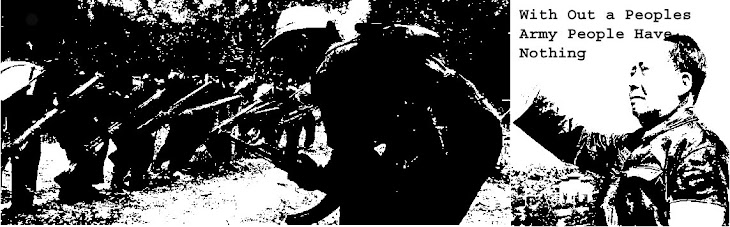
Sunday, October 14, 2007

Hated, Humiliated, Butchered

The mob murder of Nats in Bihar was no accidental atrocity, writes an outraged MAHASWETA DEVI. It was the consequence of preserved brutalities


TEN PERSONS were lynched last month in Vaishali, Bihar. They belonged to the denotified “Nat” community. I do not know how far the readers of this magazine are acquainted with the denotified communities of India. I will try to write, in brief, about what drew me to these people long ago in the 1970s. At the time, I was interested in tribals and I knew that the Lodhas of Medinipur were often engaged in theft and robbery at the behest of the rural middle-class. The Lodhas (also known as Lubhdhaks, or hunters) were forest tribals. Often the target of beatings, eviction and lynching, they were known as “born criminals” — a label which gained legal sanction during colonial rule when the British passed the abominable Criminal Tribes Act in 1871. Under it, many nomadic communities ended up being branded as criminals. There were three such tribes in West Bengal: the Lodhas of Medinipur, the Kheria-Sabars of Purulia and the Dhekaros of Birbhum. I have fought against the stigma that was attached to these people for years now, but to little avail. West Bengal has been under CPM-dominated Left Front rule for the last 30 years, but neither it nor the Central government did anything to redress the grievances of these so called “criminal tribes”, except to announce in 1952 that by no longer being notified as criminal tribes, they had become denotified.

In 1998, Budhan Sabar of Purulia was brutally killed by the police. Up until that year, I did not personally know about the all-India ex-criminal tribe situation. When Dr GN Devy [who has worked extensively with tribals in Gujarat] came to Medinipur Vidyasagar University with his friends to meet me, I was too cut-up about this and other atrocities, and failed to understand them. Then I went to Baroda at Devy’s request to give a talk on tribals. I was speaking at the Verrier Elwyn Memorial Lecture, organised each year by Bhasha, an organisation promoting tribal language, culture and literature.
Ten dead men The
media was quick to join
the police in condemning
the lynch mob’s victims

In 1998, I was too involved with Budhan’s death and the case we, on behalf of the Paschim Banga Kheria Sabar Kalian Samiti, had filed in the Calcutta High Court. My talk in Baroda was on the denotified tribals. I had asked the audience, “Who will work not for tribals alone, but for our denotified tribals as well?” That night Devy, Laxman Gaikwad (the Sahitya Akademi award winner for his Uchalya), Gandhi scholar Tridip Suhrud (translator of Chandulal Dalal’s biography of Harilal Gandhi), rural development researcher Ajoy Dandekar and others including myself talked and talked. Out of that animated discussion was born Budhan, the Denotified and Nomadic Tribes Rights Action Group newsletter.

I do not now have the very first issue of Budhan at hand, but in it we published a comprehensive list of all the tribes. Among them are the Nats.

Did Bihar participate in our later conventions? I can’t recall. But I know very well, from my past experiences, how mob lynching takes place.

I also recall scores of instances where Lodhas and Kherias from Purulia were forced to rob and plunder. As it says in one of the articles written for Budhan, “…these tribes are forced to engage in criminal activities by the police and receivers of stolen goods”. Laxman Gaikwad, who belongs to the Pardhi tribe, bears testimony to this. I know of it because I have been working with the denotified tribes of West Bengal for the last 20 years. Budhan itself was started in 1998. This is October 2007.

THE REPORTS that came from Vaishali after the September lynchings said that 10 Nats had been beaten to death by a mob because they were a band of thieves. How come no investigation has been done so far into the killing of these 10 men? Where did these Nats live? What was their profession? What explanation does the police in Vaishali have to offer? How does the chief minister of Bihar explain this mob lynching? Why did the Bihar Police not take any action? Are the Nats born criminals? Does the Bihar administration know that we have been fighting the cruel and unfair labelling of the denotified tribes for years and have regularly reported each atrocity against them to the National Human Rights Commission (NHRC)? At our behest, the then chairperson of the NHRC, Justice JS Verma, had invited the chief secretaries from all states that had denotified tribes. But today there is no point reminiscing about my past. Ultimately, on January 14, 2006, GN Devy, Udaynarain Singh of Mysore and I went to Prime Minister Manmohan Singh and gave him a letter, praying to have something concrete done for the denotified tribes of India. That “something” was done. A special commission was formed under Balkrishna Renke of Maharashtra. He was to suggest what remedial steps should be taken to improve the lives of the denotified tribes.

As far as I know, Renke is still preparing his report.

The killing of the 10 Nats in Bihar is to me the same as the killings of the Lodhas and the Sabars in in West Bengal. Between 1977 and ’79, in the very first years of CPM-led Left Front rule, about 37 Lodhas were butchered in Medinipur. Many Kheri-Sabars continued to be killed for belonging to a “criminal tribe” until the Budhan Sabar case of 1998.

All inquiries into all these cases invariably conclude with the words: “Due to the inefficiency of the police…”
Too late for help
Recovering the dead at the
scene of the lynching
Photo: Alok Jain

And that will be the end of the matter. Perhaps West Bengal will not see any more Lodhas and Kheria-Sabars being killed, but in their daily lives, they will continue to be humiliated for being born Lodhas and Kheria-Sabars. Only the other day, a Lodha boy I know of, a graduate, got a job in a village school. The school authorities deman - ded a bribe of Rs 1,70,000 from him. The boy could not meet their demands. The school authorities came to the class where he was teaching and called him a “born criminal”. There are so many good laws made, but they are implemented so rarely.

Were the media, whether Hindi or English, to search out stories about the Nats and other denotified tribes of Bihar, this is what they would find: that the denotified tribes of India are people who live below the poverty line, that starvation is a regular fact of life for them, and that they are thus easy to recruit for such members of society as wish to use them. Poverty, hunger, landlessness, no education, no job prospects — these are everyday realities for the Nats, just as they are for the majority of
India’s people.

Being branded a “denotified tribe” makes these communities easy targets. Dalits, caste Hindus, Muslims, everyone who feels like it can kill them. When will the state government start doing something to ensure that the Nats do not have to live in fear of being lynched any more?

Friday, October 5, 2007

Naxalite strike alert for shrines

OUR BUREAU

Siddhivinayak temple
New Delhi/Mumbai, Oct. 3: Home minister Shivraj Patil today warned of Naxalite attacks at “religious places”.

One such reported target came under the scanner in Mumbai with the high court asking the Maharashtra government to produce documents showing intelligence warnings of a terror strike on the Siddhivinayak temple.

Addressing a conference of directors-general and inspectors-general of police in the capital, Patil said: “They (Naxalites) are likely to use modern technologies… (and) use publicity apparatus to mislead the masses.”

He added: “They are likely to create mischief and violence at places where innocent people congregate in large numbers. Religious places can be attacked. The police may become their targets. Politicians and other important persons may also be targeted.”

The minister said sleeper cells may be found in “mega cities” and fake currency notes used “to fund terrorism”.

Patil stressed on better intelligence and pulled up some states for laxity in police modernisation.

“I am sorry to say that the funds made available are not utilised by some states in the agreed time-frames. Our request to you and the state governments is that the deficiencies in this respect may be removed and utilisation of funds increased with determination and imagination,” he said.

The Maoist-hit states have been given special funds to fortify police stations and buy armoured vehicles and de-mining and communication equipment.

In Mumbai, people living close to the Siddhivinayak temple railed at the stepped-up security measures as Bombay High Court asked the state to produce evidence of intelligence reports showing the shrine was under threat from suicide bombers.

The order came on a PIL contending the construction of a “security” wall around the temple had caused inconvenience to Prabhadevi residents.

State advocate general Ravi Kadam submitted that Mumbai police had received intelligence warnings that terror groups could target Siddhivinayak, a favourite with Bollywood stars.

The bench asked if the wall provided “foolproof security” to the temple. Kadam replied that such security was not possible, but the wall had been built to stop suicide bombers coming in vehicles.

The next hearing will be six weeks later

No safe zone in Andhra, Maoists warn leaders

HYDERABAD, OCTOBER 3: The CPI(Maoist) has in the latest edition of its mouthpiece People’s March explained the reasons for the attack on former Andhra Pradesh Chief Minister N Janardhan Reddy in Nellore district on September 8. Claiming that it can still “deliver effective blows on the ruling class by adopting guerrilla warfare and executing plans with courage and determination”, the outlawed Left wing party said Janardhan Reddy was “notorious for unleashing large-scale terror on the revolutionary masses” and held him responsible for the death of 400 revolutionaries. “He continues to be an important leader and is behind every fascist measure taken by the YSR Government,” it observed.

The party admitted that the bid on the former Chief Minister’s life was not an easy job. “It had to be executed on a plain terrain with hardly any cover to hide. It had to be executed according to the programme of the target and not at midnight, which is the most convenient time for the guerrillas to retreat safely,” the extremists explained. The militant outfit lauded the “courage and determination” of its cadre who chose such a time and terrain to launch the attack, which it claimed “unnerved the police and the politicians most”.

Sounding a warning to the police and politicians, it said “there is no safe zone” for the “reactionary forces”. “Maoists can strike anywhere anytime. The Vakadu incident has shattered the myth that the Maoist movement is finished in Andhra,” it claimed.