January 3rd, 2007
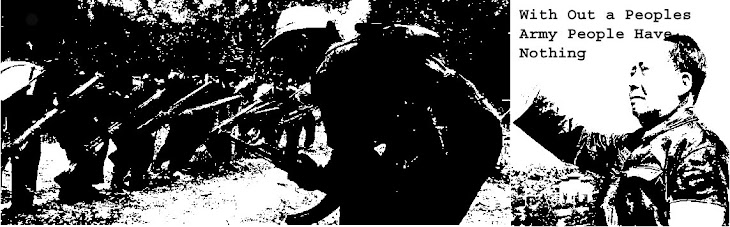
Colombia’s governing class seriously affected by amnesia, now pretends to have discovered lukewarm water by appropriating for themselves the autorship of the proposal to Legalize the Consumption of Drugs made by a Plenary Session of the Central High Command of FARC in March of 2000. This proposal was made known that same year in the Public International Hearing on illicit products, which took place in Los Pozos, before a wide presence of personalities from the international and national community whom in order not to put in an uncorfortable position the governments of the United States and Colombia refrained from expressing their points of view in face with a subject of transcendental importance on the health and the well-being of the peoples. In order to contribute elements of analysis to our amiable readers on the controverted phenomenon, consustancial to the prevailing system, we added the alluded proposal integrally.
With the development at any cost of Capitalism in their imperialistic stage, which in this phase of globalization sinks in misery most of the world’s population, many peoples with an important agrarian economy, move to cultivations of cocaine, poppy and marijuana as their only alternative of survival.
The profits of these peasants are minimum. Who truely make large sums of money are the middlemen who transform these products into psico-tropic substances and who transport and comercialize them in the markets of the developed countries, particularly the one of the United States of North America in the first place. The authorities in charge to fight this process are easy prey of corruption, because their ethics succumbs before any bribe greater than 50 dollars.
Governments, industrialists, sportsmen, artists, cattle ranchers and landowners, the military, politicians of all colours and bankers give themselves moral licence to accept money from this business which generates great sums of dollars originating from the drug addicts of the developed countries.
Capitalism has sickened the moral of the world by allowing for a constant growing of the demand for narcotics, at the same time that the imperial powers make its marketing
illegal, given its incapacity to produce the raw material. The example of the market of marijuana in the United States is ample evidence.
As the demand in their own territories is so great as is the voluminous amount of dollars, which by this concept leave the frame of their borders, the imperial powers erect the link of production in their strategic enemy, in serious threat for their national security. They forget their own postulates of free market: the supply Vis a Vis the demand, unloading their arrogance against the peasants who simply work to survive because they are condemned by neoliberalism to the misery of underdevelopment.
Drug trafficking is a phenomenon of globalized capitalism and of the gringos in the first place. It is not a problem of FARC. We reject drug trafficking. But as the North American government justify its criminal action against the Colombian people in the existence of drug trafficking we exhort them to legalize the consumption of narcotics. Thus the high rents produced by the illegality of the marketing of narcotics are suppressed from their roots, therefore the consumption is controlled, those who are drug-dependants are clinically looked after and this cancer is definitively eliminated. To great diseases great remedies.
Meanwhile, they must contribute sufficient funds to the treatment of their sick, to educational campaigns that serve to move humanity away from the consumption of these drugs and to finance in our countries the substitution of the cultivated lands for nutritional products that contribute to the healthy growth of the youth of the world and to the improvement of their moral qualities.
But the North American government should stop financing the war through policies such as PLAN COLOMBIA, criminal strategy that fuels more gasoline to our internal conflict. They should stop experimenting with the life of our compatriots spraying worms that kill all the vegetation and in many occasions the people. They should stop fumigating because they are killing the environment. They should stop altering our precarious ecological balance. They should not place the Colombian peasants in the cross fire of their dirty intentions, because the gringos are used to wage war very far away from their borders with any pretext and to make criminal experiments with the inhabitants of our underdeveloped countries.
If they truly want to eliminate the drug trafficking phenomenon, they must be serious. They must not use the misfortune of our underdevelopment as an electoral element in the fight of democrats and republicans in the EE.UU. Nor use it as a shameful pretext to justify interferences in internal affairs of our countries.
The leaders of the imperial power of the north must leave their double moral, their hypocrisy and their ambition and make a real contribution to humanity. They should not forget that the old Roman Empire perished due to its arrogance and immorality.
FARC-PEOPLE’S ARMY
PLENARY SESSION OF THE CENTRAL HIGH COMMAND
Showing posts with label DRUG. Show all posts
Showing posts with label DRUG. Show all posts
Monday, December 24, 2007
Thursday, October 4, 2007
Think Again: Drugs
September/October 2007
Prohibition has failed—again. Instead of treating the demand for illegal drugs as a market, and addicts as patients, policymakers the world over have boosted the profits of drug lords and fostered narcostates that would frighten Al Capone. Finally, a smarter drug control regime that values reality over rhetoric is rising to replace the “war” on drugs.
“The Global War on Drugs Can Be Won”

No, it can’t. A “drug-free world,” which the United Nations describes as a realistic goal, is no more attainable than an “alcohol-free world”—and no one has talked about that with a straight face since the repeal of Prohibition in the United States in 1933. Yet futile rhetoric about winning a “war on drugs” persists, despite mountains of evidence documenting its moral and ideological bankruptcy. When the U.N. General Assembly Special Session on drugs convened in 1998, it committed to “eliminating or significantly reducing the illicit cultivation of the coca bush, the cannabis plant and the opium poppy by the year 2008” and to “achieving significant and measurable results in the field of demand reduction.” But today, global production and consumption of those drugs are roughly the same as they were a decade ago; meanwhile, many producers have become more efficient, and cocaine and heroin have become purer and cheaper.
It’s always dangerous when rhetoric drives policy—and especially so when “war on drugs” rhetoric leads the public to accept collateral casualties that would never be permissible in civilian law enforcement, much less public health. Politicians still talk of eliminating drugs from the Earth as though their use is a plague on humanity. But drug control is not like disease control, for the simple reason that there’s no popular demand for smallpox or polio. Cannabis and opium have been grown throughout much of the world for millennia. The same is true for coca in Latin America. Methamphetamine and other synthetic drugs can be produced anywhere. Demand for particular illicit drugs waxes and wanes, depending not just on availability but also fads, fashion, culture, and competition from alternative means of stimulation and distraction. The relative harshness of drug laws and the intensity of enforcement matter surprisingly little, except in totalitarian states. After all, rates of illegal drug use in the United States are the same as, or higher than, Europe, despite America’s much more punitive policies
Prohibition has failed—again. Instead of treating the demand for illegal drugs as a market, and addicts as patients, policymakers the world over have boosted the profits of drug lords and fostered narcostates that would frighten Al Capone. Finally, a smarter drug control regime that values reality over rhetoric is rising to replace the “war” on drugs.
“The Global War on Drugs Can Be Won”

No, it can’t. A “drug-free world,” which the United Nations describes as a realistic goal, is no more attainable than an “alcohol-free world”—and no one has talked about that with a straight face since the repeal of Prohibition in the United States in 1933. Yet futile rhetoric about winning a “war on drugs” persists, despite mountains of evidence documenting its moral and ideological bankruptcy. When the U.N. General Assembly Special Session on drugs convened in 1998, it committed to “eliminating or significantly reducing the illicit cultivation of the coca bush, the cannabis plant and the opium poppy by the year 2008” and to “achieving significant and measurable results in the field of demand reduction.” But today, global production and consumption of those drugs are roughly the same as they were a decade ago; meanwhile, many producers have become more efficient, and cocaine and heroin have become purer and cheaper.
It’s always dangerous when rhetoric drives policy—and especially so when “war on drugs” rhetoric leads the public to accept collateral casualties that would never be permissible in civilian law enforcement, much less public health. Politicians still talk of eliminating drugs from the Earth as though their use is a plague on humanity. But drug control is not like disease control, for the simple reason that there’s no popular demand for smallpox or polio. Cannabis and opium have been grown throughout much of the world for millennia. The same is true for coca in Latin America. Methamphetamine and other synthetic drugs can be produced anywhere. Demand for particular illicit drugs waxes and wanes, depending not just on availability but also fads, fashion, culture, and competition from alternative means of stimulation and distraction. The relative harshness of drug laws and the intensity of enforcement matter surprisingly little, except in totalitarian states. After all, rates of illegal drug use in the United States are the same as, or higher than, Europe, despite America’s much more punitive policies
Subscribe to:
Posts (Atom)

