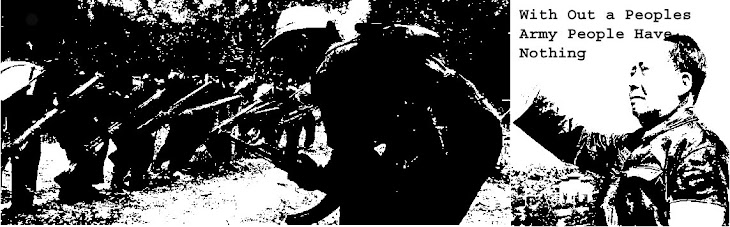
Feb. 22 (Bloomberg) -- India's communist rebels, known as Naxalites, are winning support from the rural poor as they expand an insurgency into 17 of the country's 28 states, targeting landowners and industry, Mehda Bisht, a defense analyst, said.
The government has deployed a force of 1,500 soldiers and policemen in the eastern state of Orissa where the rebels last week killed 14 policemen.
``Naxals are very incipient now,'' said Bisht of the independent Institute of Defence Studies and Analyses in New Delhi. ``Down the line, it may become a body like'' the Liberation Tigers of Tamil Eelam, which has waged a 25-year fight for a separate homeland in Sri Lanka, she added.
Indian Prime Minister Manmohan Singh said Dec. 20 the extremists are the ``single biggest security challenge to the Indian state'' and called for a special force to tackle the groups. The rebels operate across India in regions that contributed about three-quarters of the country's $775 billion gross domestic product in the financial year ending March 2006, according to government figures.
The states include Maharashtra in the west, Uttar Pradesh in the north, the eastern state of West Bengal and the southern state of Andhra Pradesh.
The rebels, inspired by China's former leader Mao Zedong, have killed 598 security personnel and 1,894 civilians in the four years until Oct. 31, according to the Indian government. They operate in tribal and rural areas and fight for jobs and land for the poor.
Rebel Attacks
At least 25 people were killed and 80 others injured in an attack by Naxalites in Dantewada district of Chhattisgarh in July last year. Last March, rebels shot dead a member of parliament, Sunil Kumar Mahato, in Jharkhand state. Former chief minister of Andhra Pradesh, N. Janardhan Reddy, and his wife, escaped an assassination attempt in September, the Times of India newspaper said in a report at the time.
A group of about 500 gunmen attacked five police posts late on Feb. 15 in Nayagarh in Orissa, stealing arms and ammunition, state-run broadcaster Doordarshan reported Feb. 17. The attack left 14 policemen dead.
The Naxalites have their origin in Naxalbari village in West Bengal state. An uprising led by communist leaders Charu Majumdar and Kanu Sanyal began in May 1967 after a laborer was attacked by a landlord in the village.
Groups such as the People's War Group, Maoist Communist Centre and Communist Party of India (Marxist-Leninist) merged in September 2004 to form the Communist Party of India (Maoist).
Fighting Back
``In the short term, the problem will continue,'' M.L. Kumawat, special secretary in the Ministry of Home Affairs, said in a telephone interview from New Delhi. ``In the long term, the states' comprehensive strategy will succeed. People will not allow those elements who want the democracy of this country to be lynched. They cannot capture power with weapons. No state will ever allow that.''
Chhattisgarh, a state with mineral resources such as iron ore, bauxite, diamonds and coal, is the ``epicenter'' of the rebels now, Kumawat said.
The economic opportunities that are opening now ``are being shut by the Maoists,'' especially in Chhattisgarh, said Ajai Sahni, executive director of the Institute of Conflict Management, an independent organization researching internal security in South Asia. ``By far this is the most serious problem that is confronting the country.''
In Chhattisgarh, 311 security personnel and civilians were killed by the rebels last year while 123 people were killed in neighboring Jharkhand state, according to the government.
New Strategy
There are about 80,000 supporters of Maoists in India and 7,000 are armed, said Paul Soren, a researcher at the New Delhi- based Observer Research Foundation. After targeting industries, rebels are now attacking government establishments and policemen.
``They have a presence in urban centers such as New Delhi,'' he said.
Hundreds of thousands of poor people, particularly from India's tribal belts, are joining the Naxalite militia to conduct raids and participate in attacks, Varavara Rao, 67, a communist and Naxalite sympathizer based in the southern city of Hyderabad, said in a telephone interview. ``The main reason is globalization.''
Economic Zones
So-called special economic zones are displacing people in India and even the communist-ruled state of West Bengal is trying to give away land to international companies, Rao said.
``The poor have no land, no water, no clothes, no food and no shelter,'' he said. ``The movement will gain momentum as more peasants are joining in. They are the people who are marginalized by globalization. Now they are fighting back.''
West Bengal Chief Minister Buddhadev Bhattacharya's government in March last year abandoned a plan to acquire land for trade zones after protests led to the deaths of at least 14 people in Nandigram.
The Maoists are getting more sophisticated weapons and forging links with groups in Nepal and Bangladesh, Soren said.
``This is not a terrorist module. It is an insurgency'' and the Maoist strategy is to mobilize people and then arm them, Sahni said. ``The hiatus between these two can be anything between three to five years. The government thinks it is a peripheral issue which they can manage through an emergency response.

No comments:
Post a Comment