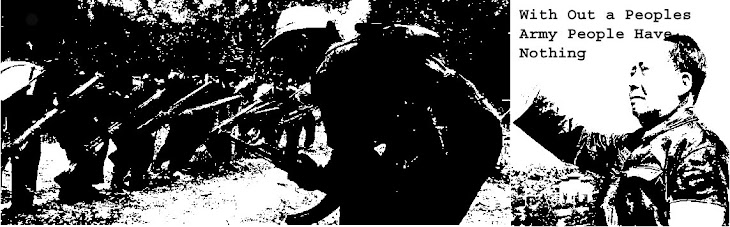
THIS WRITERS ARE MIXING PHILOSPOPHY TO NEWS HEHE (PAID FORCES) USE LENIN OR MARX NEVER BECOME VALID HEHE
Lenin called it an “infantile disorder”, but some communists are never quite cured of it. The Maoists who dream of capturing power in India through their armed rebellions are only the latest example of left-wing adventurism. Their strength and presence may have grown in some parts of India, but that takes them no closer to capturing power. Acute poverty and the many failures of the State and democratic institutions help them grow in backward and mostly tribal belts of the country. In West Bengal too, the districts where the Maoists are most active have the worst levels of poverty and economic deprivation. But the Maoists’ means or ends offer no solutions to the social and economic problems. If anything, the terror and violence they unleash undermine both democracy and the prospect of better lives for the people there. Worse still, the state’s fight against the rebels catches the common people in its web. The government has no choice but to fight the battle. It has a moral and constitutional duty to uphold the rule of law. The efficiency of the police force in Bengal is not exactly exemplary. But it would be wrong to deny it the credit for occasional good jobs. The arrest of the secretary of the Bengal unit of the Communist Party of India (Maoist) should do a lot of good to the morale of the police.
There are valid reasons, though, to criticize Buddhadeb Bhattacharjee’s government and his party, the Communist Party of India (Marxist), for the growth of Maoism in the state. The chief minister routinely blames Maoists from Bihar and Jharkhand for the rebel assaults in the state. It is common for Maoists from one state to plan and join offensives in another. But that argument does not explain why the Maoists get support and shelter among the poor people there. An honest answer would point to the government’s failure to reach economic benefits to these people. It would also suggest that the CPI(M) uses these people more for their votes than for anything else. All this is, however, no justification for the Maoist politics of killing. Society, politics and the economy in Bengal had to pay a heavy price for another variant of Maoist rebellion in the late Sixties and early Seventies. All democratic forces should unequivocally condemn the Maoist violence, irrespective of the political affiliations of its victims. The spectre of Maoism must not be allowed to haunt Bengal again

No comments:
Post a Comment