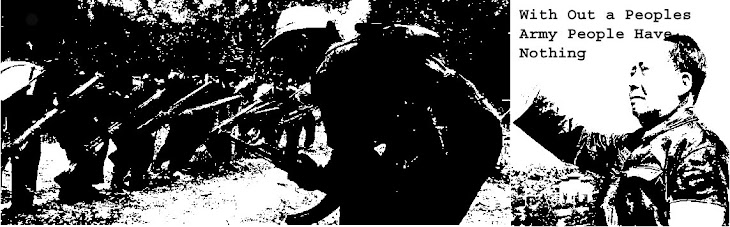
Por: Pablo Biffi / Colombian southern jungles. Especial envoy Clarin 26 de agosto

Commander" Raul Reyes is the number two of the guerrilla Revolutionary Armed Forces of Colombia (the FARC) and one of the seven members of the Secretariat of the High Command, lead by the mythical Manuel Marulanda Vélez, Sureshot, who has been for almost 60 years in clandestiny. Created in 1964, the FARC define themselves as Marxists Leninists and "Peasants and Bolivarians". In an exclusive interview with Clarín on a transitory camp mounted for the encounter with this newspaper in the southern jungles of Colombia, Reyes welcomed the contribution of the Venezuelan Hugo Chávez for an exchange of about 50 hostages - among them the ex- candidate Ingrid Betancourt- for 400 imprisoned guerrillas. But he clarified that they do not accept to hand over their prisoners in Venezuela, as proposed the Bolivarian leader who will meet with his colleague Alvaro Uribe this Friday in Bogotá. "He is making his contribution and we thank him for it. We think that it is a beginning, is new impulse, new oxygen that can be given to the subject of the humanitarian exchange. But we continue maintaining that the exchange, as being a problem derived from the internal conflict, must be solved in Colombia. We are not going to hand over prisoners in Venezuela ", he said.
With 30 years in the organization - the group counts with around 17,000 people in arms -, a past with ties to the Communist Party and as councilman of a town in Caquetá, Reyes has three children of a marriage in the civil life - when he was Luis Edgar Devia Silva- and he says to be "near 60 years of age". For the guerrilla leader, Ingrid Betancourt is not in a "kidnapped" character since February of 2002, but as a "political prisoner, for being part of a regime that we fight against". Throughout a day, Clarín shared with Reyes an extensive dialogue in which he denied the ties of the FARC with the drug trafficking and rejected them to be a terrorist organization.
- Why a humanitarian agreement to release hostages is so difficult that some have already been prisoners for 10 years?
It is that this government does not have the least intention to reach an agreement. The FARC have been insisting for more than 5 years to obtain the agreement, an exchange between about 50 hostages and 400 guerrilla prisoners. And we need to remember that in the peace dialogues with the government of Andrés Pastrana we unilaterally released more than 300 soldiers and members of the police. And we only obtained the liberation of 14 guerrillas who were ill. The rest of the hostages remained in our control in order to look for a humanitarian agreement.
- Why do you insist on the military clearing of two municipalities of 800 kilometres square, Florida and Pradera, for the exchange?
When this government assumed office in 2002 we proposed them to clear two municipalities in Caquetá, which were San Vicente of Caguán and Cartagena of Chairá. But Uribe said that we had proposed those sites because the FARC felt militarily harassed and wanted to recover ground. We said then: well, let them be other (municipalities) so that the government does not think that we want to take advantage.
- But can the exchange be done by any other way?
No, it is not possible to do it by any other way because the FARC does not have the least confidence in Uribe’s representatives, because it is an illegitimate, narco-paramilitary government, a government that does not have an interest different than war. As well, we think that it is not much to demilitarize two municipalities for 45 days for an agreement of such significance.
- But the government insists that they will not demilitarize and the FARC, that without demilitarization there is no exchange. How does one get out of that trap?
We think that we get out of this with national and international pressure, to sensitize Uribe for him to understand that the only way to reach the agreement is demilitarizing the municipalities. Uribe is not the one who has made the proposal, it is the FARC that did. It is for that reason that we have very highly valued the role that France, Switzerland and Spain have played and play in the search for the agreement. But Uribe’s policy is that of the rescue by force, without concerning him what happens to the prisoners, since what he wants is to show results in the execution of the Plan Patriota and Plan Colombia financed by the United States, and to demonstrate that he is defeating the FARC.
- It does not seem to you that this is a game of force between the government and the FARC using the hostages?
What happens is that in Colombia there is an internal conflict, a confrontation of more than 43 years just with the FARC, where the State has wanted to do away with the guerrilla. Each president used amounts of men and resources in trying to eliminate the FARC. They did not achieve it. We have grown and today we have presence in all the country. This causes the governing class to worry.
- I Insist. Is it not a game of force with the hostages in the middle?
It is that the government wants to make the country and the world think that he is defeating us and that he will make us negotiate under pressure. We are strong and we do not negotiate under pressure.
- A few months ago the government released a hundred guerrillas and with the help of the French president the "chancellor" of the FARC Rodrigo Granda was freed. A reciprocal gesture of FARC was expected such as leaving Ingrid Betancourt free, but there was nothing.
This was a unilateral action of the government within the framework of a mediatic campaign to cover the scandal of the "para-politics" that complicates things for the government, and not the product of a negotiation. And as far as the liberation of Granda, we thanked for the gesture of President Nicolas Sarkozy. But there was either a commitment of the FARC with Sarkozy for Granda to be released.
- But would it not have been important to release Ingrid or Clara Rojas and her son of three years that was born in captivity?
The problem of the humanitarian agreement derives from the Colombian internal conflict and any agreement must be done in Colombia. Any intervention in favor of the exchange is beneficial. But who decide are the government of Bogotá and the FARC.
- Chávez offered his country and a cleared zone for the exchange. Would the FARC accept to do the exchange in Venezuela?
I want to thank President Chávez through Clarín for that gesture, for that generosity, for that sense of solidarity with Colombia, and with the relatives of the prisoners, and the FARC. But it is necessary to remember here that President Chávez makes this offer after Senator Piedad Córdoba, of the Liberal Party and opposed to Uribe, requested Chávez to contribute with the agreement. And he is making his contribution that we think is a beginning, a new impulse that can be given to this subject of the humanitarian exchange. But we continue maintaining that, as being a problem derived from the internal conflict, the exchange must be solved in Colombia.
- Then the FARC rejects to hand over hostages in Venezuela?
Yes, what we continue soliciting is the demilitarization of Pradera and Florida and we would ask President Chávez that, given his political weight, contributes to achieve that clearing that leads the parts to seat at a table and to reach the agreement to end the captivity of the prisoners.
- Are you going to negotiate in Venezuela?
Yes, we do not have problems in engaging in a dialog anywhere, but the prisoners hand over must be in Colombia.
- Is it not a demential act to have people retained during as much time as Betancourt, who has been for more than 5 years in the hands of the FARC?
For us in no case there is kidnapping, because what occurs is the result of a confrontation of the people in arms, the revolutionary guerrillas in Colombia, and a State that has a ramification in the three powers, Executive, Judicial and Legislative. The soldiers in our control are war prisoners and the rest are political prisoners. Ingrid Betancourt is in the group that we denominate "exchangeable", a candidate to the presidency and before a senator, but of the system that we fight against. For that reason she is not a kidnapped person.
- And in the case of the three Americans who you have since February of 2003?
They are North American agents. The FARC did not go to capture them in Washington, New York, Texas or Boston, but it took them prisoners in Colombian territory when they were engaged in espionage in our country.
- The government and the United States say that they were civil contractors...
That is the great lie. They were agents who were engaged in espionage in Colombia, violating our sovereignty, violating our independence. In spite of it, we included them within the exchangeable ones and we aspire to release them once the comrades Simón Trinidad and Sonia, prisoners in the United States and all the men and woman guerrillas who we have in the jails of Colombia are released.
- Why do you take business people as hostages?
No. Which business people?
- There are no business people?
Not that I know. And if there is any it is because they have not paid the tax of our Law 02, a tax that the FARC collects from the business people, who are the same who finance the war against the Colombian people. There are many who pay that tax with no need to take them prisoners and others that do not pay it. And as they do not pay it then we take them prisoners. Those are not included within the package of exchangeable because once they pay the debt with the organization they are freed.
- How much do they have to pay?
Ten per cent of the profits they obtain each year.
- You spoke of Simón Trinidad and Sonia, prisoners in the U.S.A. Do you think it is possible a negotiation with Washington to exchange them for the three Americans?
It would be necessary to see in what terms, but we would not have problems, so long as it is done through the Colombian government. Really, Uribe is not more than their employee and he does what they command him to do.
- is it that not a myth?
No, that is real.
- How does it manifest itself?
The North American themselves recognize it. It is a reality that expresses itself as to where they know perfectly well who Uribe is and nevertheless they support him knowing of his quite dark paramilitary and narco-trafficker past. They support him in spite of knowing the fraud that he has always done, the buying of votes, in spite of knowing who were in the lists with him and where their votes come from. And they stand with him in spite of the daily lies he tells them with supposed triumphs he does not have. They have given him much money for Plan Colombia, and he has not been able to show them the results that he committed to give them. He offered to do away very quickly with the FARC in his first government and he also committed to rescuing his prisoners with no need for the agreement. He did not achieve either.
- It was never clear how the 11 deputies in control of the FARC died on June 18. What really happened?
We said that an unidentified force caused the death of the deputies. Until today we have not been able to identify what happened.
Why?
Because in the region where the 11 deputies were there is ongoing confrontation, because there are all type of forces such as the official army, the police, the paramilitary at the service of the State, bands of delinquents armed by the narco-traffickers. For that reason the FARC did not want to venture into making any force responsible of that lamentable event.
- The government says that you killed them?
That is not true. That is part of the media campaign.
- But is there no responsibility on the part of the FARC? Because you have the responsibility for the life of the hostages.
Sure, there were faults in the security. There were faults of our people, who had the responsibility to take care of the prisoners


No comments:
Post a Comment